
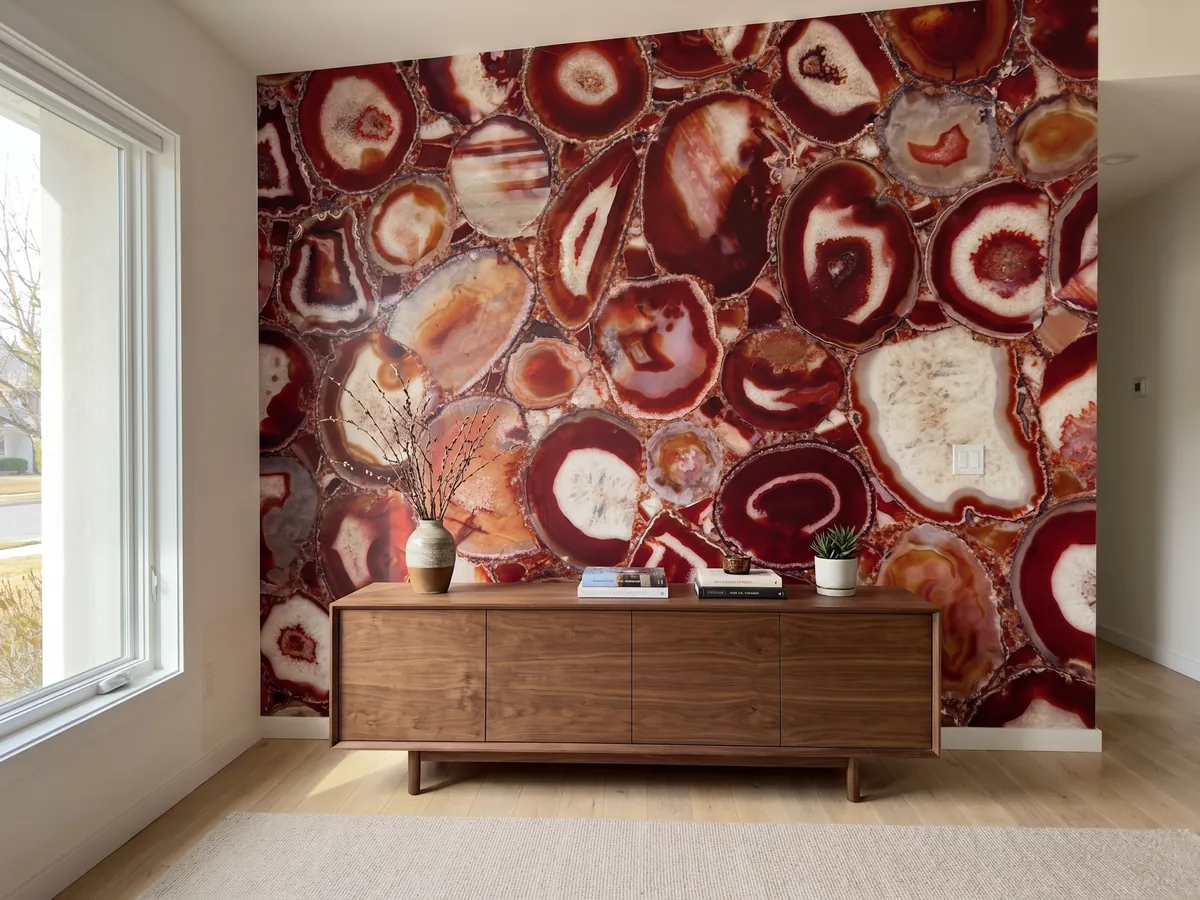
red agate
Semi-precious stone · China
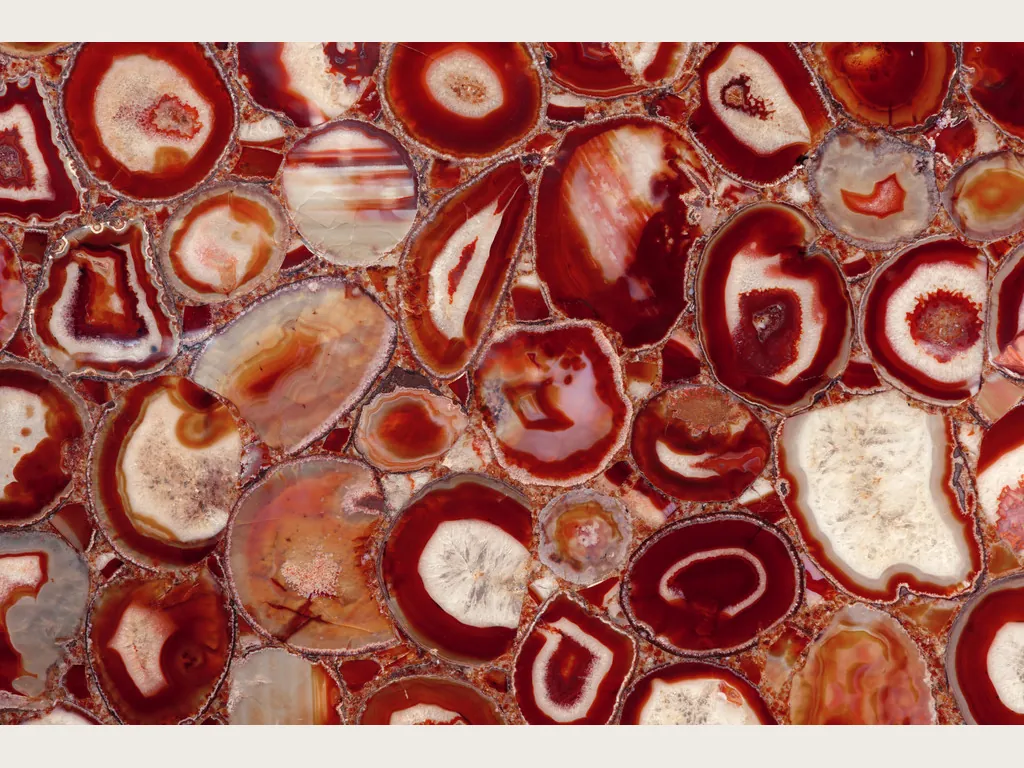
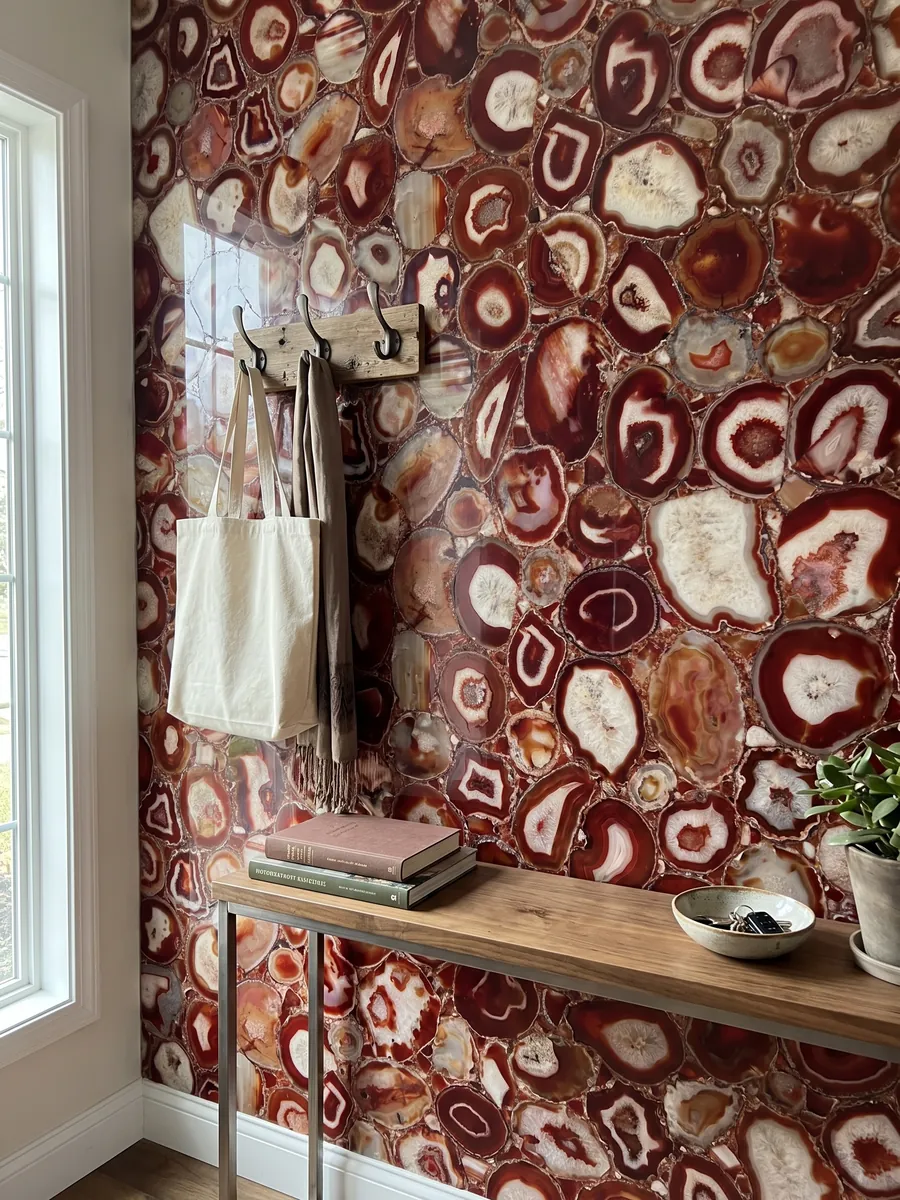
Slice by slice, red rings surround cream centers in the slab in the photo. Red agate is assembled by hand into a mosaic, for accent walls and indoor pieces that are seen up close.
It is also known as Red Agate.
- TypeSemi-precious stone
- ColorRed
- OriginChina
- ShippingOn request, to any country · how it reaches yours
What Red Agate looks like in the photo
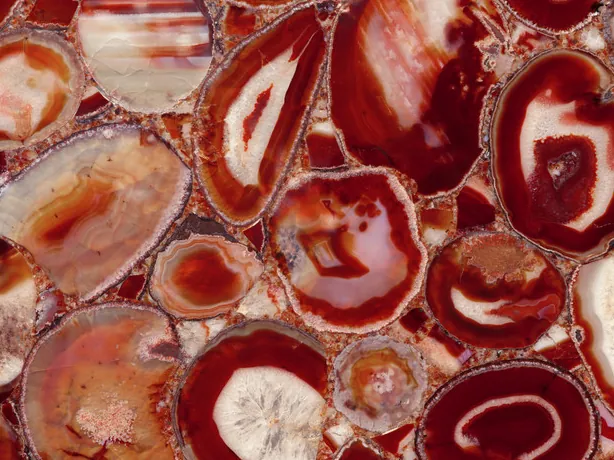
Each piece of the mosaic is a rounded slice of agate, with red rings around a cream center. The slices sit on a burgundy background. That red against the cream explains the high contrast. Cream and white complete the palette. The pattern changes moderately within the slab and the polish shines over the whole slab, as the photo shows.
- BackgroundBurgundy red
- PatternMosaic
- ContrastHigh
- Variation in the slabModerate
- LightMay let some light through in the lighter areas
Where does Red Agate fit?
- WallsAccent walls, headboards and bar fronts
- TablesIndoor tables; trivets under anything hot
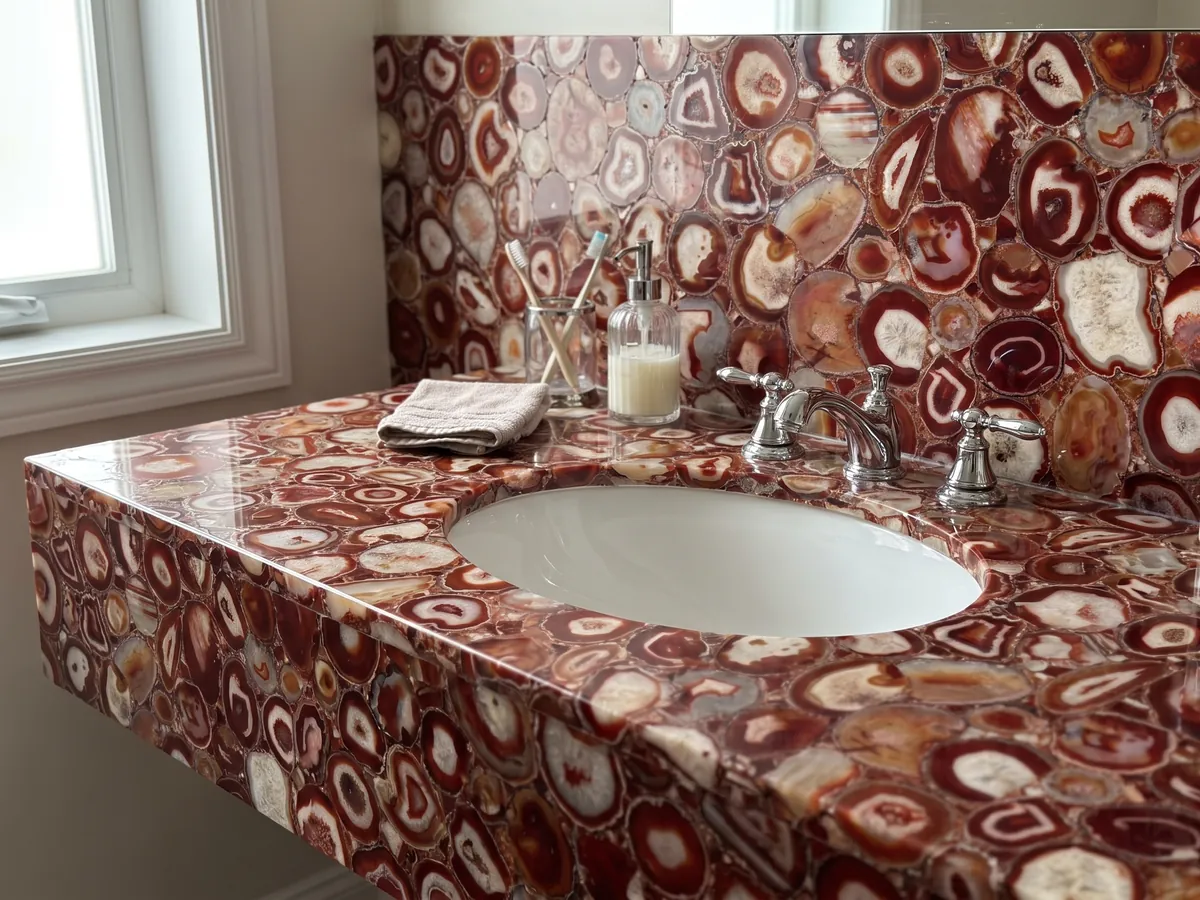
- BathroomsA sink or a bathroom wall; not the shower with direct water
- KitchenNot the countertop: the resin cannot take stove heat
- Interior floorsNot floors: walking scratches the resin
- OutdoorsNever outdoors: direct sun degrades the resin
- ScratchesMedium
- StainsMedium
- HeatLow
A red agate sink works as a bathroom accent piece; see more panels and ideas in sinks.
Finishes of a Red Agate slab
The slab comes in a glossy polish, as you can see in the photo. To mount it backlit, the real slab has to let some light through.
-
Polished
Even gloss over every piece of the mosaic: it is the finish the photo shows.
-
Backlit
If the red rings and the cream centers let light through, it can be backlit; the real slab says so.
Technical specifications
| Type | Semi-precious stone |
|---|---|
| Color | Red |
| Origin | China |
| Hardness | 6.5 to 7 on the Mohs scale |
| Pattern | As a mosaic |
| Light | Can let some light through in the lighter areas |
| Common finishes | Polished, backlit |
| Works best in | Walls |
| Thickness and format | Depending on the slabs available; we confirm it in the quote |
Other agate selections
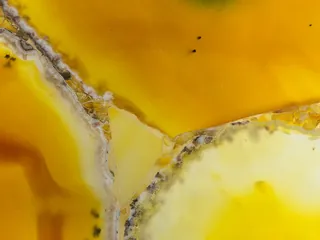
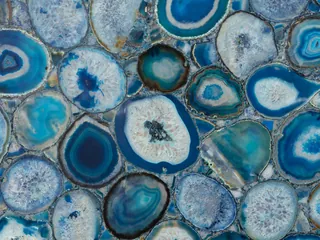
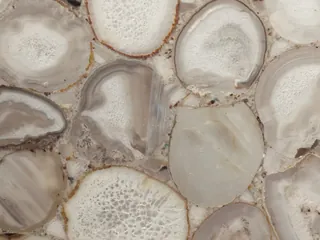
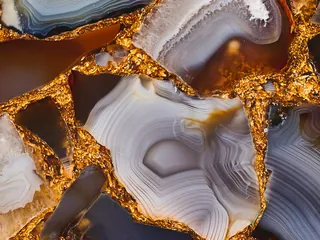
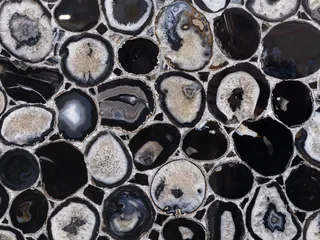
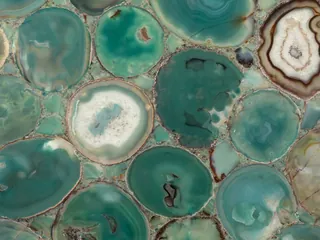
It is the red one of the family. In its photo, blue agate shows rings with white centers and the yellow one carries gray edges; there are also green, gray and purple ones, and gold or silver joints.


How much does Red Agate cost?
There is no single price per m². These factors move it, and the quote already includes shipping to your country.
- Variety
- Thickness
- Finish
- Square meters and cuts
- Shipping
For a quote, send us
- The measurements or a photo of the plans
- The thickness, if you have already decided on it
- The finish you like
- The city where you receive it
Red Agate at home
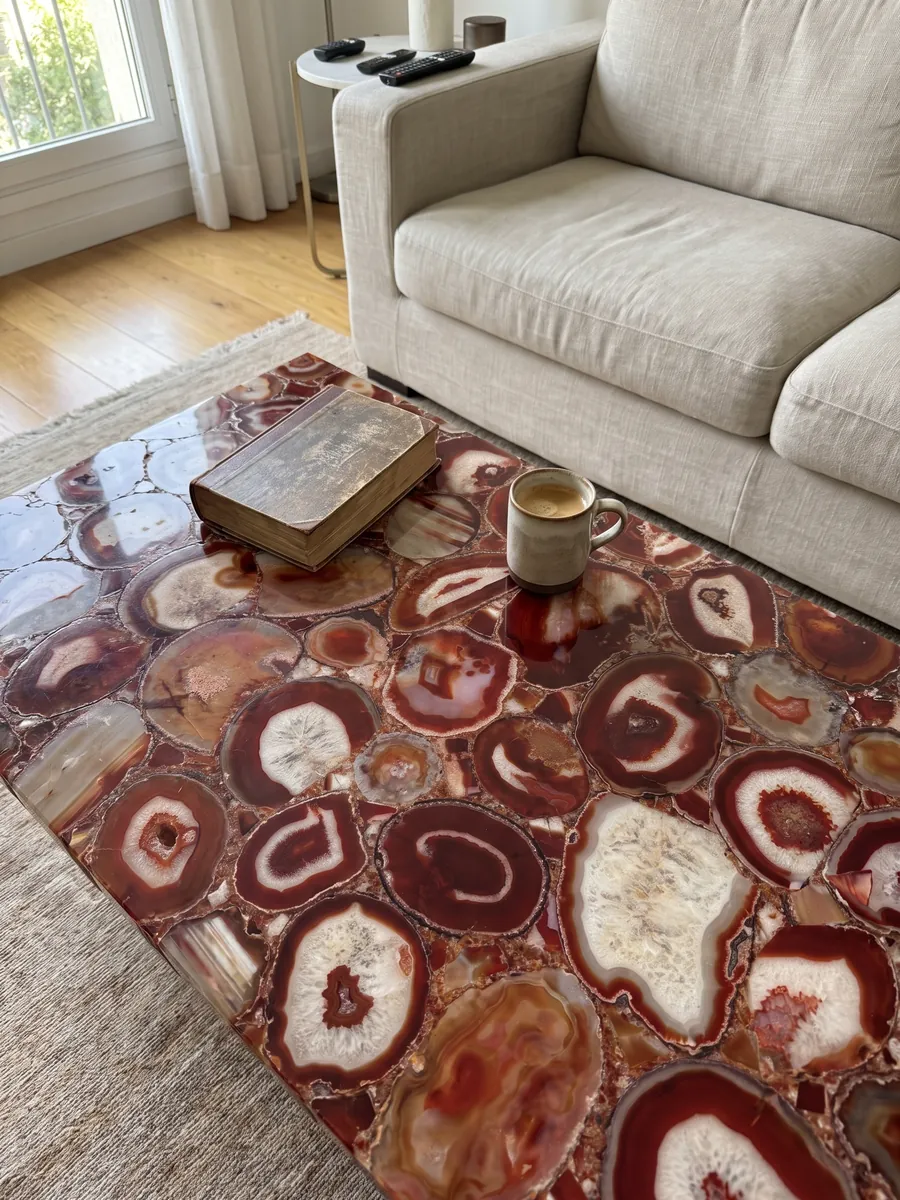
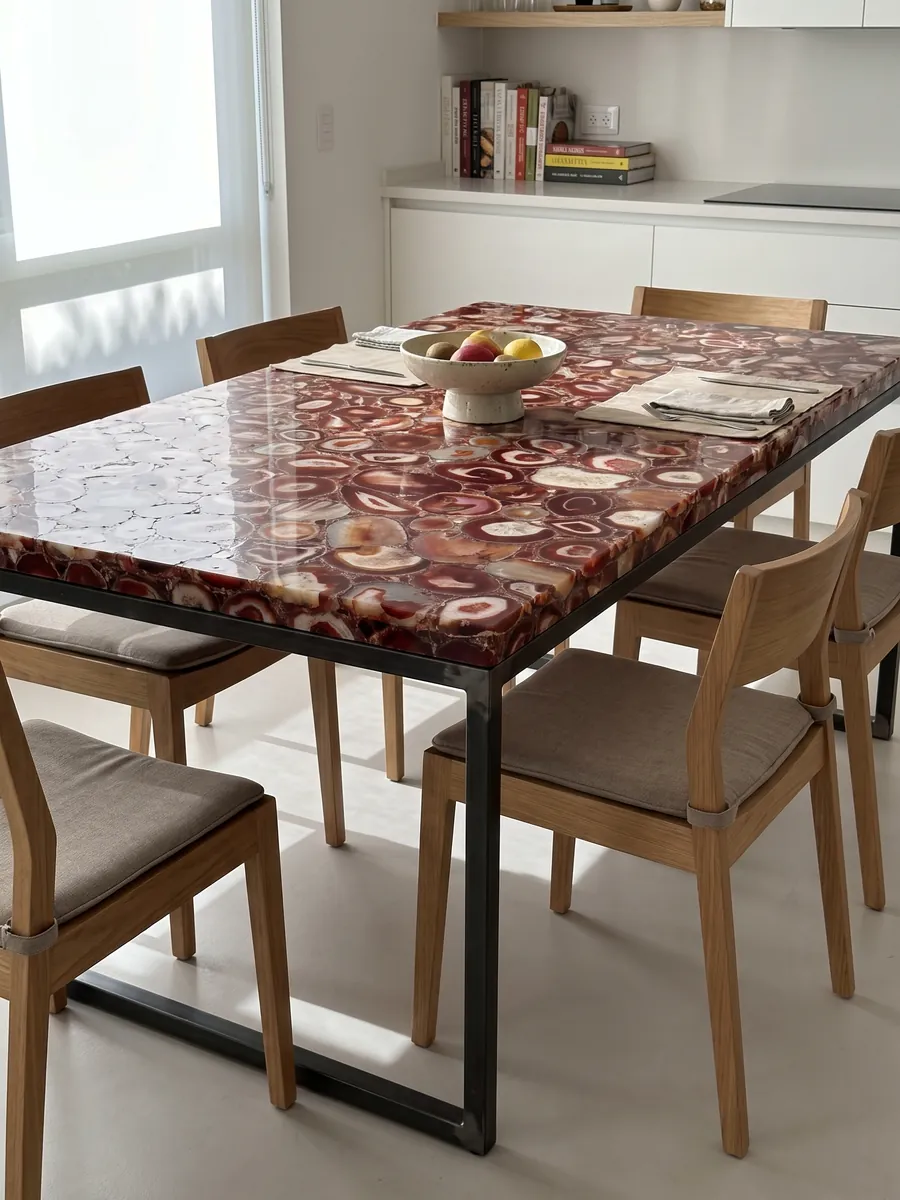
How it looks in different spaces. Visualizations created from the real slab.
Similar stones
Questions about Red Agate
Is a Red Agate slab a single stone?
No. It is assembled by hand: slices of natural agate are placed one by one and the resin joins them on a base, so each panel keeps a pattern of its own. Anyone looking for Red Agate finds the same stone. Before you buy, we send you photos of the slabs available for your order.
Can Red Agate be mounted with light behind it?
Only when the real slab allows it. The red and cream rings in the photo may let some light through, with no certainty. In that case the light source is mounted behind the panel and not touching the slab, so it gets no direct heat.
How does it differ from red jasper?
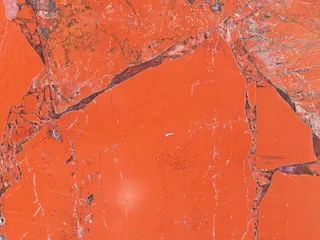
Both are red panels of semi-precious stone. In its photo, red jasper fills large pieces of an intense orange-red, separated by fine gray joints. In the photo of this slab, red agate instead forms a mosaic of slices with rings and cream centers.
How do you care for a Red Agate panel?
The resin calls for gentle cleaning: a soft cloth and water, no solvents or abrasive cleaners. On a table, trivets under any hot source: direct heat is not good for the resin.
How does a Red Agate slab reach my country?
We ship to any country, with the stone's documents of origin and its CE certification. On the shipping page we explain how it reaches each region.