
Marble, granite and travertine floors with the finish each space needs
You choose the stone and the finish for the traffic of each area and approve the slabs from photos before the cut. We ship to any country and, when the project calls for it, we also arrange installation.
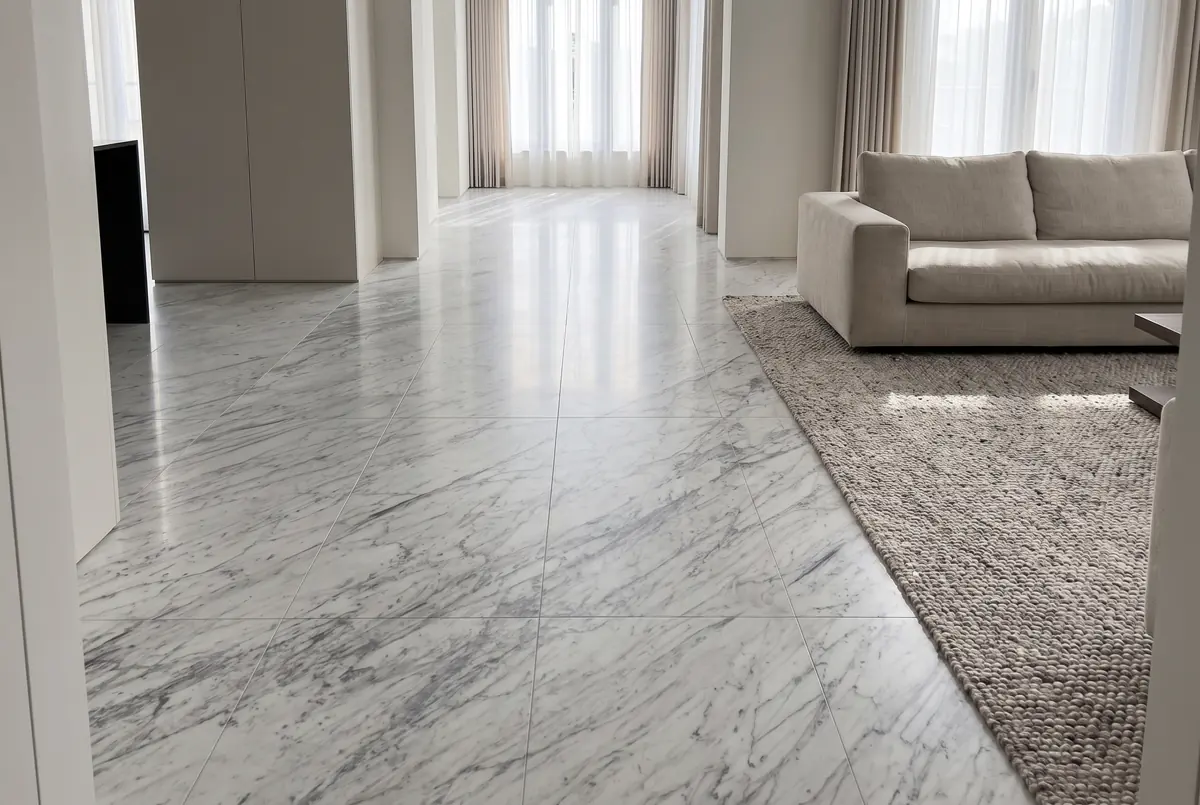
- 2 cm indoors3 cm outdoors and in heavy traffic
- Polished or with gripdepending on whether it gets wet
- Numbered slab layouteach slab arrives with its place
A granite, marble or travertine floor, matched to the traffic
Footsteps, sand from shoes and water wear a floor down. Each stone responds differently to those three things.
-
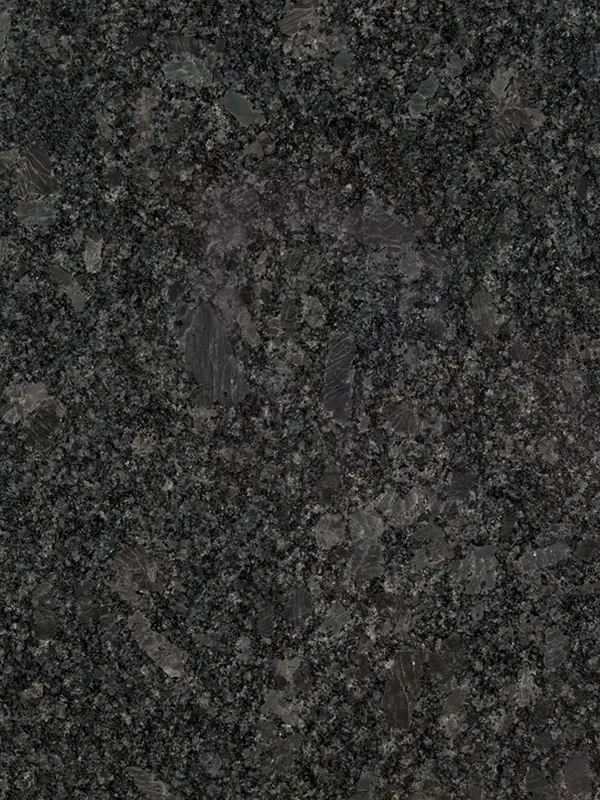
Granite
- Holds up
- Entrances, lobbies and hallways with heavy traffic. A polished finish keeps its shine for years, and acids do not etch it.
- Keep in mind
- Polished stone is slippery when wet. Outdoors, order a flamed finish, which leaves the surface rough.
-

Marble
- Holds up
- Living rooms, bedrooms and circulation in a home for decades. When wear shows, the floor is repolished in place.
- Keep in mind
- It is softer than granite: heavy traffic scratches it, and lemon or vinegar leave matte etch marks.
-
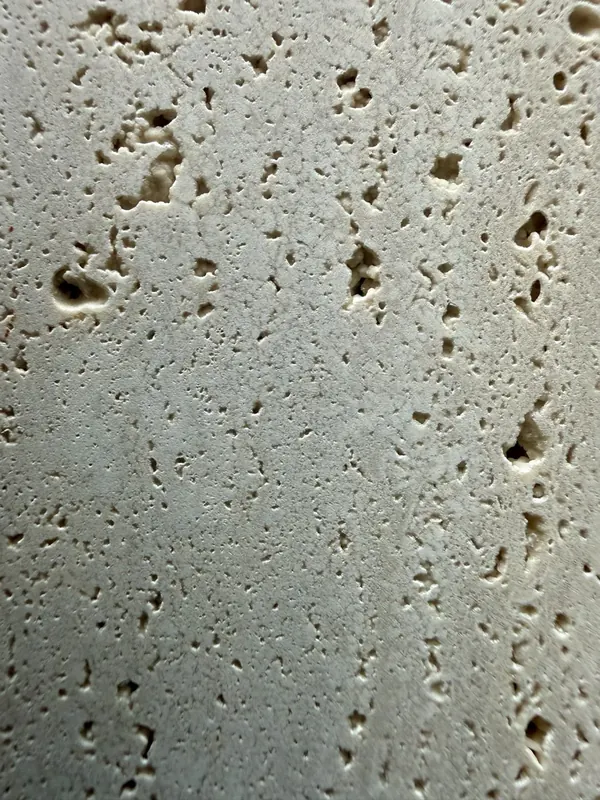
Travertine
- Holds up
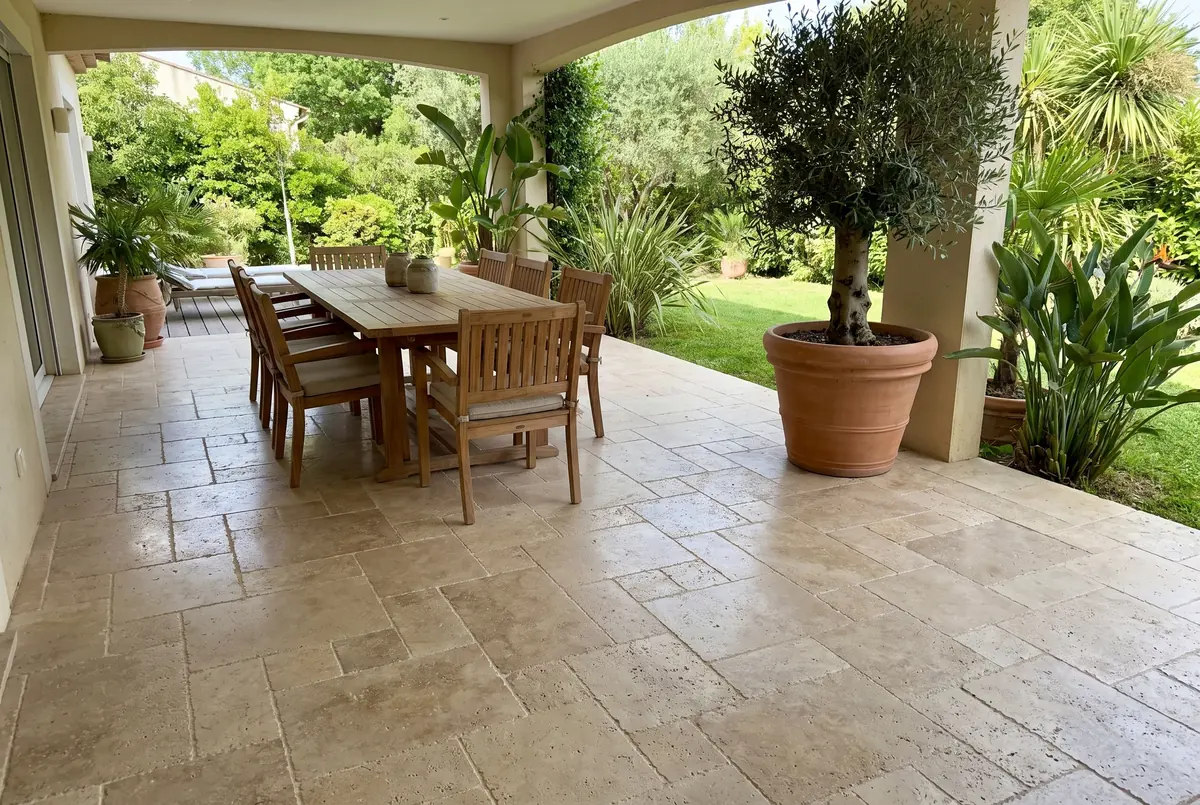
- Terraces, patios and pool edges. Antiqued or brushed, it grips even under bare, wet feet.
- Keep in mind
- It has natural pores. Filled, it stays smooth and easy to clean indoors; unfilled is the norm outside.
We compare the two most requested in detail in Marble or granite?
The layout of a marble floor
The layout is the drawing that says where each slab goes: its size, the pattern they form together, and where every joint runs. The slabs arrive numbered, to be laid in that order.
- Large format with tight jointsSlabs of 60 x 60 cm or more. With few joints, the floor reads as one surface, which shows off a soft-veined marble at its best.
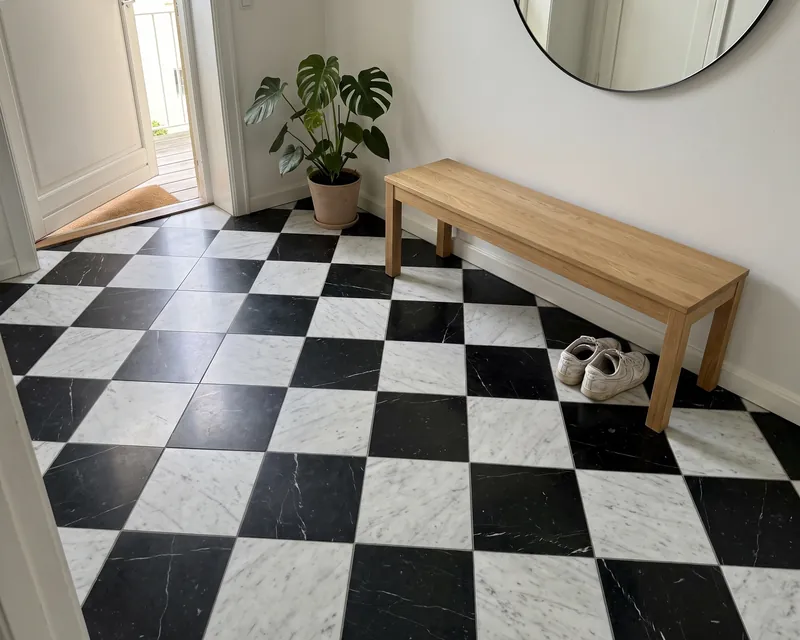
- CheckerboardTwo stones alternating, almost always a white marble and a black one. Order calibrated slabs, all the same size, so the corners line up.
- HerringboneLong pieces meeting at an angle. It leaves many offcuts at the edges, so it uses more stone than a large format.
- ScreedThe base has to be level, firm and dry: the stone copies every unevenness underneath it.
- AdhesiveOne made for natural stone, spread with no gaps. Under white marbles, white adhesive is used so it does not darken the slab from below.
- SlabIndoors, 2 cm is the norm. Each one is laid in the spot its number marks.
- JointFrom 1 to 3 mm, with a grout matched to the stone. Large surfaces also get expansion joints.
The trim where the floor meets the wall is called a baseboard in the US and skirting in the UK. It comes from the same stone as the floor. The floor pieces themselves are tiles.
Colors for marble, granite and travertine floors
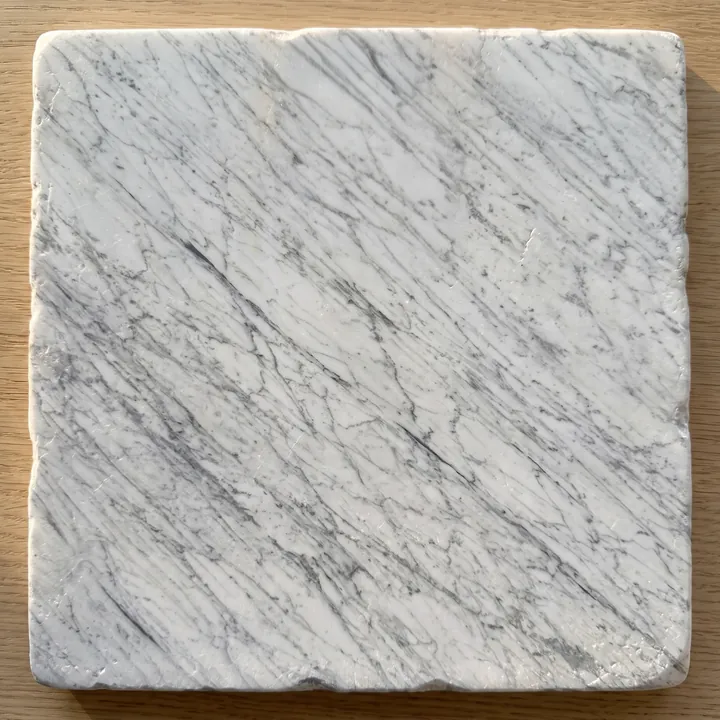
From the dark grey of a granite to the cream of travertine. Renderings created from real photos of each stone.
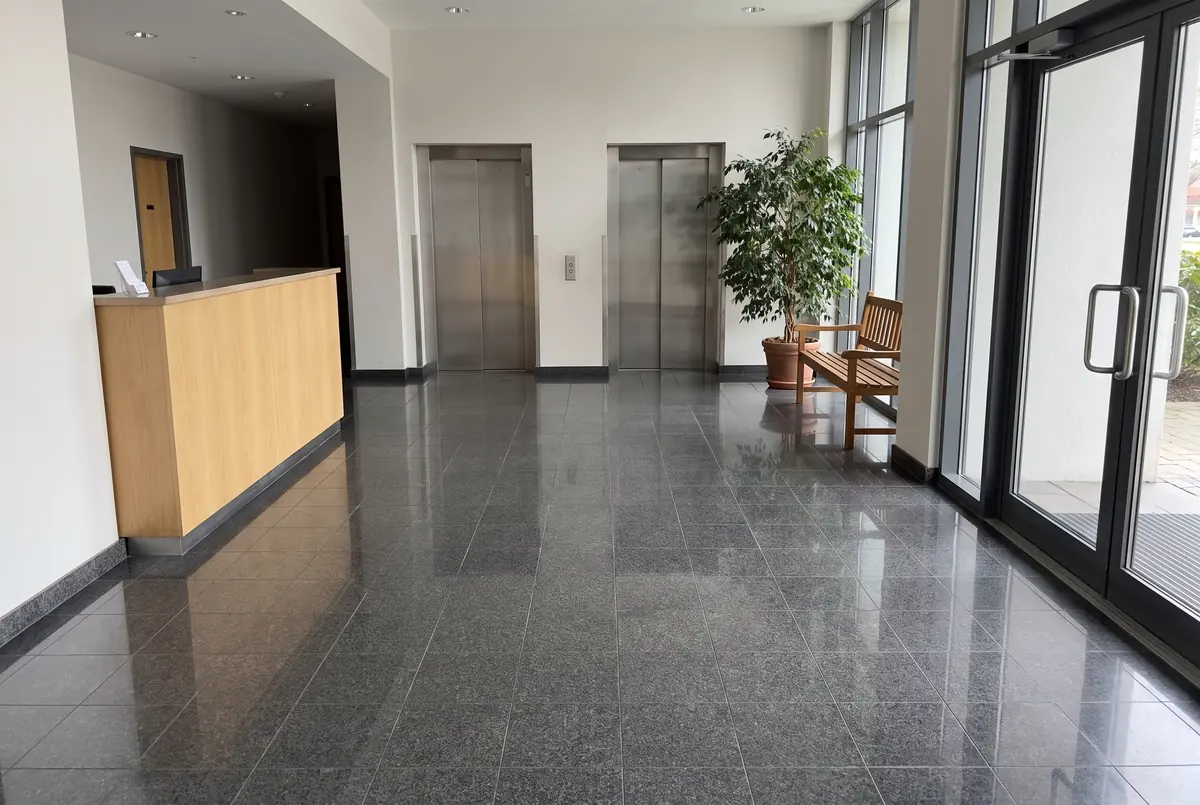
Where a polished white marble floor belongs
Polished marble is slippery when wet. Under heavy traffic, sand from shoes scratches it and acids take away the shine. That is why a polished white marble floor looks best in the living rooms, bedrooms and dry hallways of a house.
In a bathroom, a matte lappato finish grips better than polished. In showers, terraces and outdoor areas, a rough finish is the right call: brushed or antiqued for marble and travertine, flamed for granite. A terrace is outdoors even when it has a roof: rain and dust still reach it. Polished granite takes traffic far better than marble, though it is also slippery when wet.
What a marble floor costs
The price moves less with square meters than with the stone and how much of each slab your layout uses. A checkerboard or herringbone leaves more offcuts than a large format.
- Stone and selection
- Square meters and pattern
- Thickness and format
- Finish
- Destination
Every factor explained in How much does marble cost?
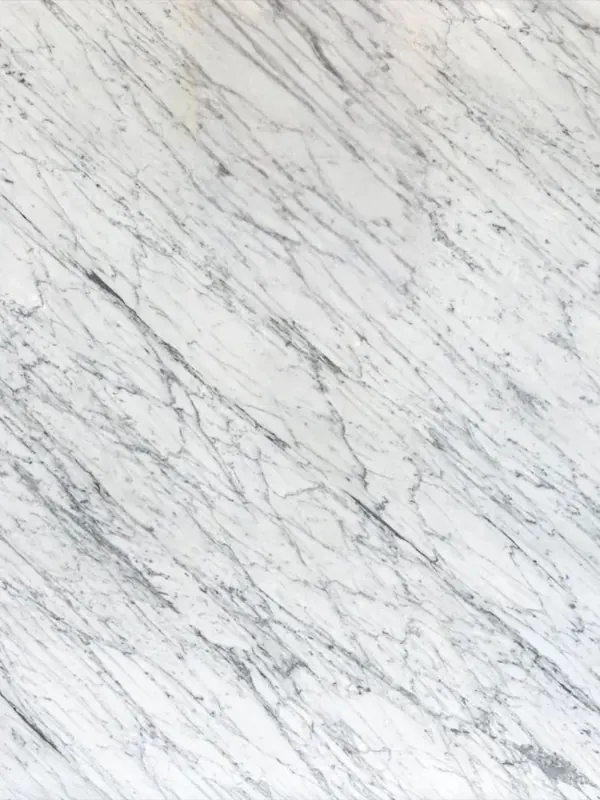
Stones for a polished granite or marble floor
Four stones that feel good underfoot, from lightest to darkest.

Questions about marble and granite floors
The same stone can continue on the stairs and on the baseboards and thresholds. See also how the stone reaches your country.
What is better for a floor: marble or granite?
For heavy traffic, granite: it is harder, acids do not etch it and the polish lasts for years. Marble has veining granite does not, and it works very well in a home; when wear dulls it, it can be polished again.
Does a white marble floor stain?
White marble is porous and absorbs colored liquids, so it is sealed after installation and the sealing is repeated every one or two years. The dull marks from lemon or vinegar are another matter: the sealer does not prevent them, though they show less in a lappato finish.
How thick is a stone floor?
Indoors, 2 cm is the norm; where every millimeter of height counts, 1-cm slabs are also available. Outdoors, for driveways and heavy-load areas, 3 cm is used.
What finish is best for an outdoor floor or a terrace?
One with grip: brushed or antiqued for marble and travertine, flamed for granite. Polished and lappato finishes are slippery when wet, so they are kept for indoors.