
Marble quality: first or second choice
Before you buy, we go over the available slabs with you, confirm the documented country of origin and tell you what technical information applies to each product.
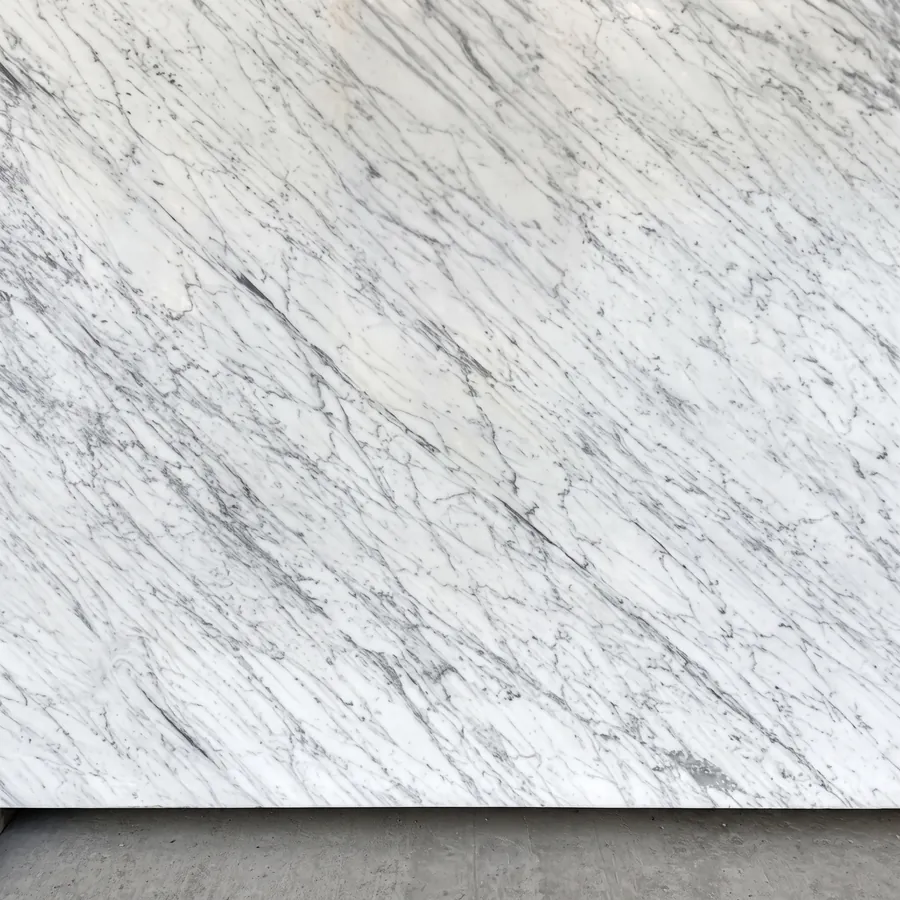
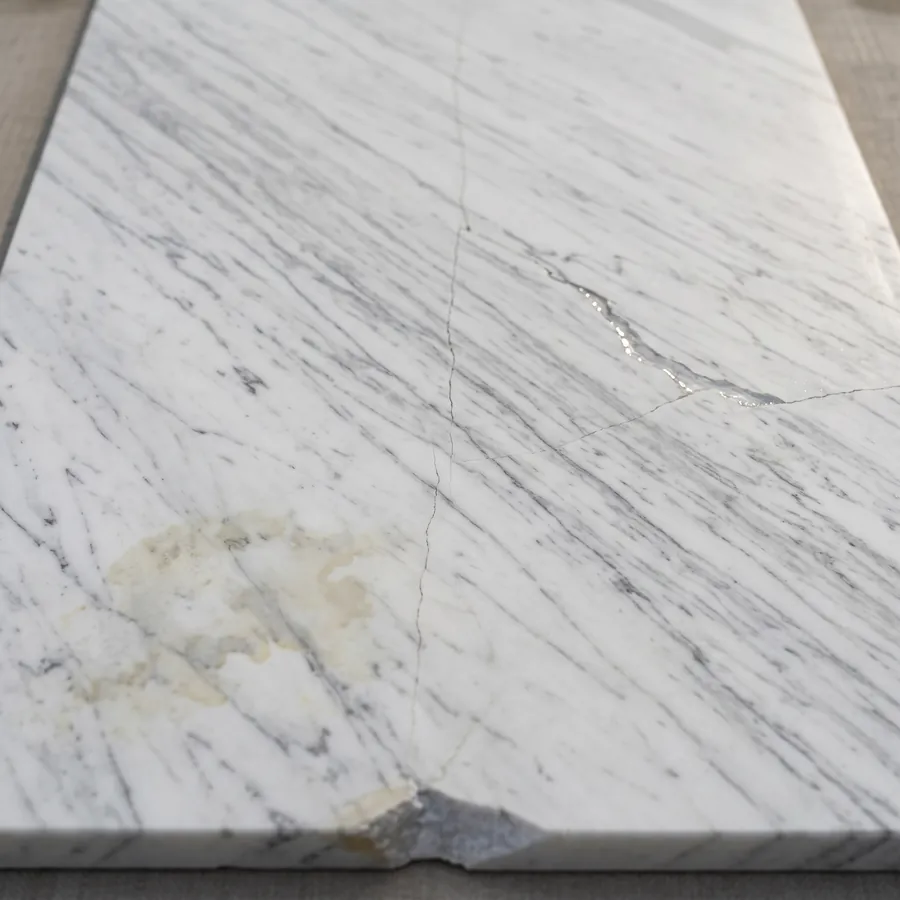
- Fine fissure crossing the vein
- Crack filled with resin
- Stain in a different tone
- Damaged corner
Both slabs are visualizations made from the real photo of a Carrara C, to show the defects clearly.
Stones still standing
These works show how far good stone goes when it is cut well, installed well and cared for. How long yours lasts depends on where it goes and how it is used.
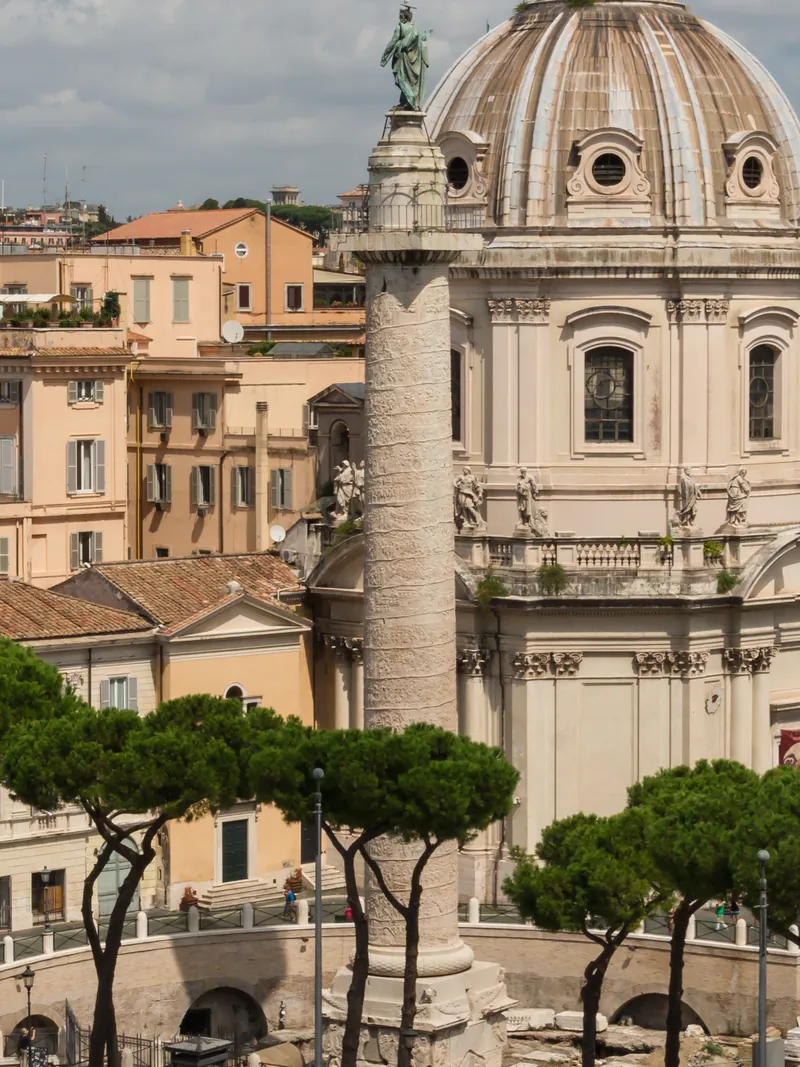 AD 113Trajan's Column, RomeTwenty marble drums from Luni, the Roman name for Carrara.Marble · 1,900 years
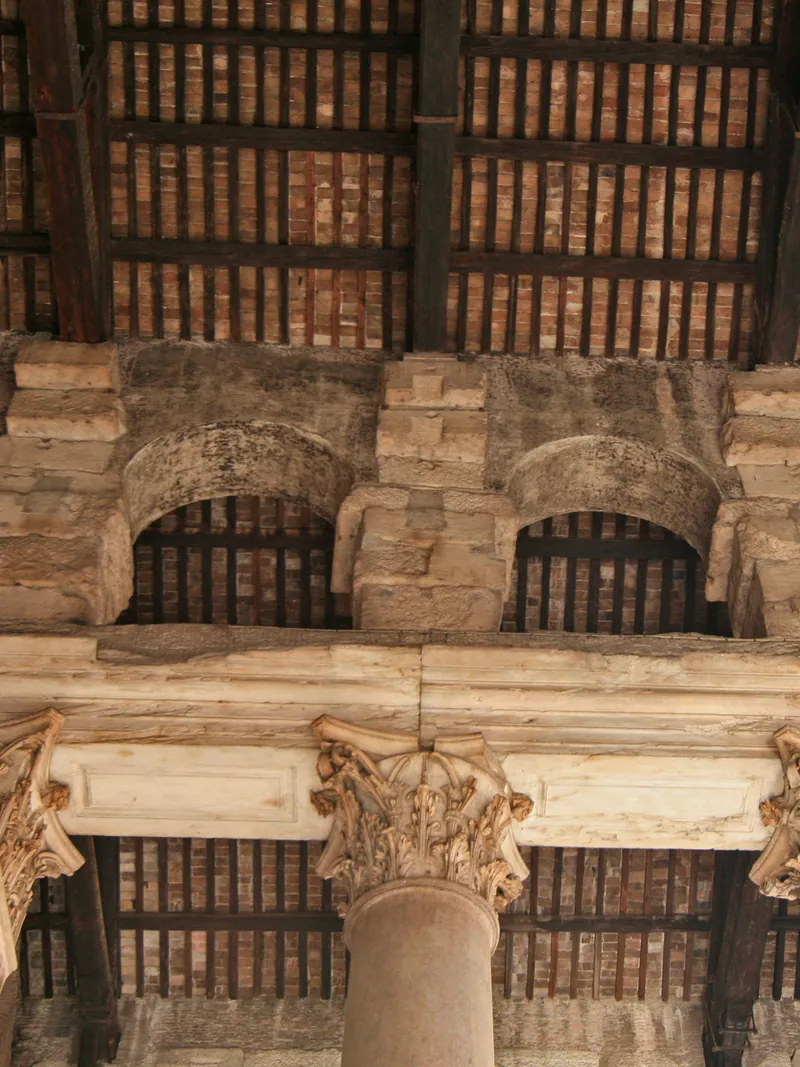 c. AD 125Pantheon, RomeColumns of Egyptian granite with marble capitals, in use ever since.Granite and marble · 1,900 years
 1504David, FlorenceCarved by Michelangelo from a block from the Carrara quarries.Marble · 500 years
 1653Taj Mahal, AgraClad in white Makrana marble, in India.Marble · 370 years
What they have in common is not the country: it is good-quality stone, well cut and well installed.
Photos via Wikimedia Commons: Jebulon (CC0), Jensens (public domain), Jörg Bittner Unna (CC BY 4.0) and Almbauer (CC0).
Why pay for a first-choice slab
A first-choice slab goes further: you get more usable pieces, the veining runs from one piece to the next, and you don't have to cut around defects. A second-choice slab works for small pieces, but it means more waste and, over the years, more repairs.
- More usable pieces per slab
- Veining that continues between pieces
- Even color across the whole order
- Fewer repairs with use
- More waste cutting around defects
- Seams where the veining doesn't match
- Tones that shift between slabs
- Resin fills that show over the years
What happens inside
Marble is a mosaic of crystals that expand at different rates with heat. As the temperature changes, microcracks open between them and the stone becomes more porous. A slab that already comes with fissures or filled pores stains and breaks sooner.
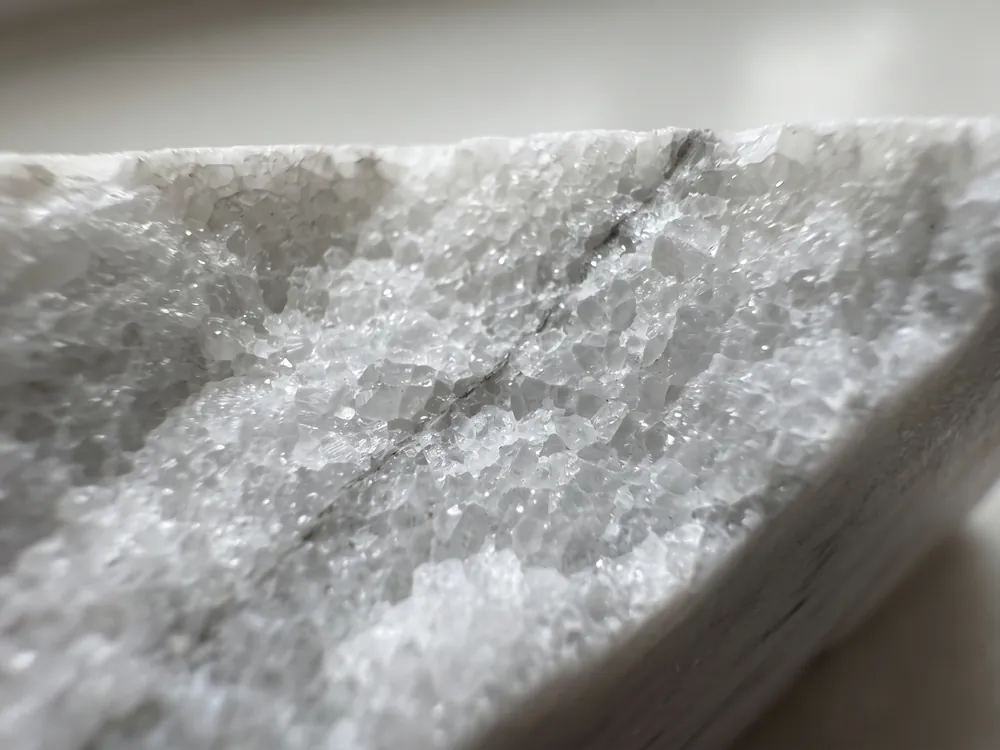
Source: Luque et al., "Direct observation of microcrack development in marble caused by thermal weathering", Environmental Earth Sciences, 2011.
Where does your stone come from?
Several white marbles look so alike that geologists tell them apart with laboratory analysis, not by eye. That is why we verify the documented country of origin and check every slab, instead of trusting the trade name alone.
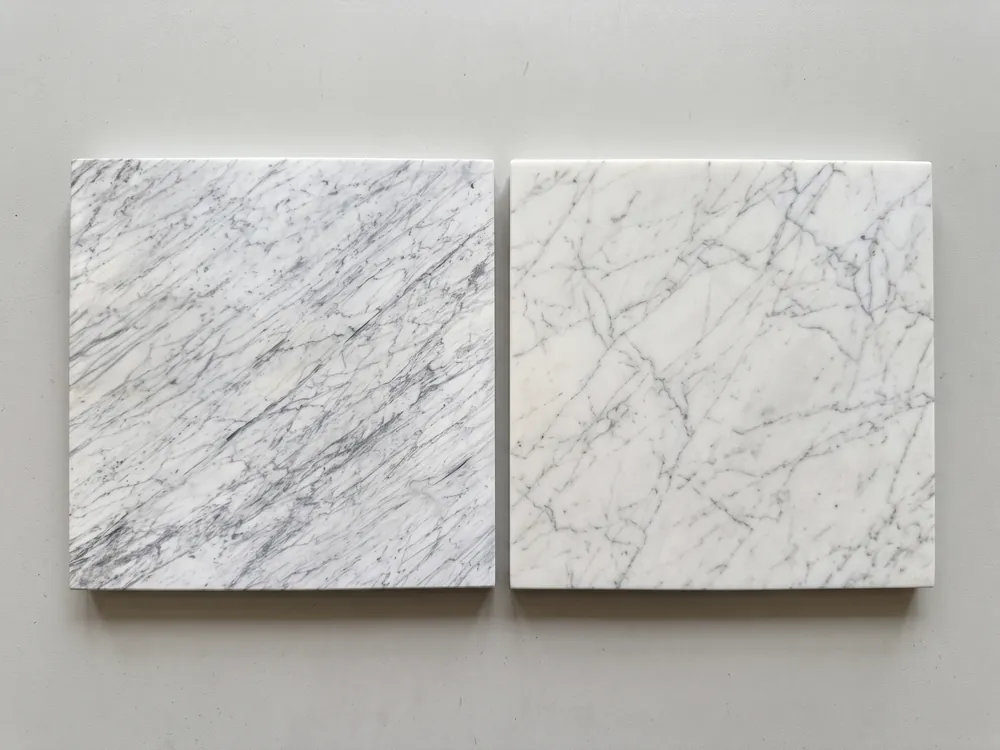
What to look for in the photos of your slabs
Before you buy, we send you photos of the available slabs. Check these six things; we go over them with you.
 Even colorFrom one slab to the next in the same order, the background should look the same.
 A vein that continuesIn slabs from the same block, the vein continues from one to the next.
 FissuresFine lines that cut across the vein instead of following it.
 Resins and fillersAreas with a different sheen: cracks or pores that have been filled.
 StainsPatches in another tone that are not part of the pattern.
 Edges and thicknessIntact corners and the same thickness across the whole slab.
The six samples are crops from the first- and second-choice visualizations above.
Choice also changes the price: we explain it in How much does marble cost?
What CE/DoP documentation tells you
The Declaration of Performance (DoP) reports values tested to common European standards, so you can compare two stones on the same data. CE marking and the DoP cover stone used in buildings, such as floors, cladding and stairs; kitchen countertops, tables and sinks are usually left out.
- EN 13755Water absorptionHow much water gets into the stone. Less absorption means fewer stains and better performance in humid climates.
- EN 1936Density and porosityHow much empty space the stone has inside. A good indicator of how it will absorb and age.
- EN 12372Flexural strengthHow much load it takes before it breaks. Key for countertops with an overhang, steps and floors.
Before you confirm the order, we tell you whether CE/DoP documentation applies to that product and is available.
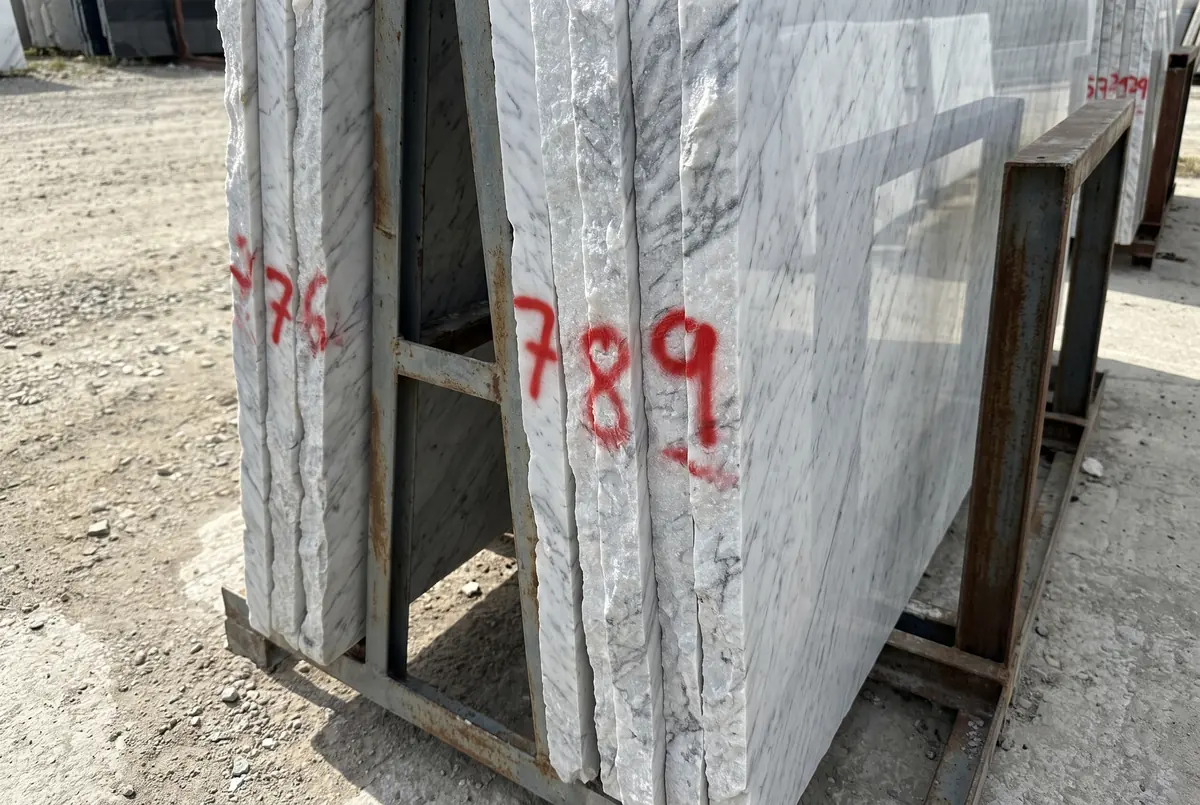
Traceability: which block your slab comes from
When the producer numbers block and slab, we keep that reference so the slab you choose in the photos is the one that arrives.
- Country of originWe tell you the country of origin when it is documented.
- Technical sheetIf the producer has one, it gathers the declared values for that stone.
- Block and lotWe aim for every slab in your order to come from the same block.
Questions about quality
What is a first-choice marble?
It is a slab selected for its even looks, its continuous veining and the absence of defects that matter for its intended use. As a natural stone, every slab keeps its own variations.
Is a second-choice slab bad?
Not always. It has defects you can see, but it can work for small pieces, low-visibility areas or cuts where the defect gets discarded. It costs less. What matters is knowing what you are buying before you pay.
How do I know what quality I will receive?
Before you buy, we send you photos of the slabs available for your order, in good light and up close. We confirm the country of origin and, when it applies and is available for that product, we share the CE/DoP documentation.
Is marble from other countries lower quality?
The slab defines the quality, not the country. There are excellent marbles from Spain, Greece, Turkey or India. And there are second-choice slabs in every quarry. That is why we check slab by slab.