
Quartzite vs quartz: what we explain to our clients before they choose
Quartzite is made by nature; quartz is made in a factory. Quartzite takes heat and sun without changing; quartz needs no sealing and costs less. For a kitchen that really gets used, or a space with lots of sun, we almost always recommend quartzite.
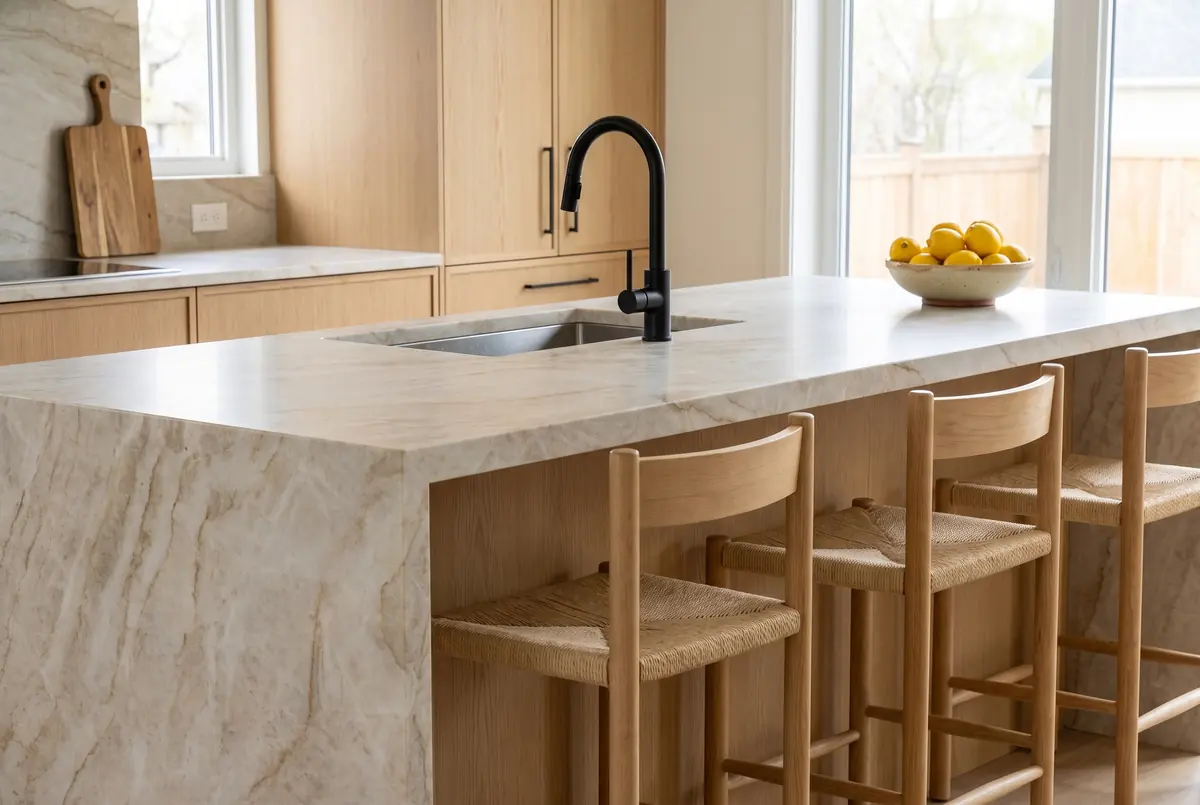
To many clients, quartzite and quartz are the same thing: the names are almost identical and they look alike in photos. They are two very different materials, and choosing the wrong one costs you over the years.
The difference in one sentence
Quartzite is made by nature; quartz is made in a factory.
Quartzite is a natural stone. It starts as sandstone that the Earth's heat and pressure transformed over millions of years. Every slab is unique, with its own veins and tones.
Quartz is engineered: crushed quartz mixed with resins and pigments, then pressed into slabs. Every slab of the same model looks the same, or nearly.
What changes in your kitchen
| Quartzite | Quartz | |
|---|---|---|
| Origin | Natural stone, every slab unique | Engineered, identical slabs |
| Hot pots and pans | Handles it very well | The resin can scorch or discolor |
| Direct sun | Keeps its color | Can yellow over the years |
| Lemon, vinegar, wine | No marks | No marks |
| Maintenance | Sealing about once a year | No sealing |
| Look | Natural veining, real impact | Uniform and predictable |
| Price | Higher | Lower |
Heat. A pot straight off the stove does nothing to quartzite. Quartz contains resin, and strong heat can scorch, stain or discolor it.
Sun. In Florida, Texas, California and anywhere with strong sun, this matters most. In direct sun, on a patio or next to a big window, standard quartz can yellow over the years, which is why many manufacturers exclude outdoor use from the warranty. Quartzite keeps its color, so we recommend it for bright, hot and outdoor spaces.
Acid marks. Here the mix-up is with marble, not quartz. Lemon, vinegar, wine and coffee leave a dull mark on marble that no sealer fully prevents. Quartzite and quartz both handle acids well.
Maintenance. Quartzite is natural and has pores, so it is sealed about once a year. It is a simple job that keeps the stone like new, and we always recommend it. Quartz does not need it.
When we recommend quartzite
When a client wants the look of marble in a space that really gets used.
A recent case: a client asked us "marble or granite?" for a large breakfast bar. He did not like granite. Marble, with lemon, wine and pans every day, would have suffered. Looking at the renders of his project, we saw he wanted a light stone with warm tones and soft veins, so we proposed a quartzite with that look and the toughness he needed. His answer: "That one!"
We recommend it for:
- kitchen countertops and bars used every day;
- sunny or outdoor spaces;
- bathrooms, living rooms and bedrooms that need a strong statement, because few stones have its impact;
- anyone who wants the marble look without worrying about stains.
When quartz works, and when marble does
Quartz works in an interior bathroom with no direct sun, when you want a uniform color and a tighter budget.
Marble is still the right choice when beauty comes first and use is light. For a sideboard in a living room we recommended Calacatta Viola marble: it gets little use, nobody cooks on it, and no quartzite has those violet veins. There is no best stone; there is the right stone for each space.
Quartzites sold as "marble", and the other way round
The market mixes up names, sometimes out of ignorance and sometimes on purpose.
Quartzites that look like marble: Taj Mahal, White Macaubas (one of the most searched stones on our site), and many stones called "Calacatta" something that are really quartzites. They are excellent stones, and precisely because they look like marble they are sold under marble names.
"Quartzites" that are not. Some stones sold as quartzite, like certain lots of Super White, are actually dolomitic marble: softer, and lemon marks them. That is why we test every slab before we sell it as quartzite.
It happens with marble too. A client recently sent us a photo of his bathroom vanity top, sure it was marble. It was limestone: very similar to the eye, but a different stone. Trade names say little; what counts is what is inside the slab.
Three tests before you buy
Always ask for a sample and run these three tests:
- Glass. Rub an edge of the sample against a glass. Real quartzite scratches glass; marble does not.
- Lemon. Leave a few drops for 10 minutes, then wipe. If a dull mark remains, it is not quartzite.
- Coffee or oil. Leave a drop for 10 minutes, then wipe. If a dark spot remains, the stone absorbs and must be sealed well before installation.
If the supplier will not let you run these tests, that is already an answer.
Three tips we always give
Slabs from the same block. Every quartzite slab is different. A large project needs slabs from the same block, or the color shifts from piece to piece. For a kitchen with a bar and a feature wall of about 430 sq ft (40 m²), that is 8 to 10 slabs once you count the cuts, and we request them all from the same lot before confirming.
Weight. Quartzite is dense and heavy. A cantilevered bar or a floating countertop needs the right supports, planned before installation, not after.
Price. Quartzite usually costs more than quartz and many marbles: it is harder to cut, more material is wasted and it comes mostly from Brazil. In return it lasts a lifetime, does not mind sun or hot pans and needs very little maintenance.
Frequently asked questions
Is quartzite harder than granite?
In many cases, yes. It is one of the hardest natural stones used in kitchens.
Can quartz be used outdoors?
Standard quartz, no: in the sun it can turn yellow. There are products made for outdoor use, but they need checking case by case.
Does quartzite stain?
Not from acids. Oil or coffee can soak in if it is not sealed, which is why it is sealed about once a year.
Where does quartzite come from?
Mostly from Brazil, though there are quarries in other countries too.
What is the downside of quartzite?
It needs sealing about once a year, it is heavier and harder to cut, so installation costs more. In return it handles heat, sun and acids.
Which is best for a kitchen: granite, quartz or quartzite?
For daily use, quartzite or granite, which handle heat and scratches. Quartz works indoors away from direct sun and hot pans. If you want the look of marble, quartzite comes closest.
What should you clean quartzite with?
Water and a pH-neutral soap. Avoid bleach wipes and strong acidic cleaners: they will not etch it the way they etch marble, but over time they wear away the sealer.
Have a project and not sure which to choose?
Send us a photo of the space and we will tell you which stone suits it, even if you end up buying elsewhere.
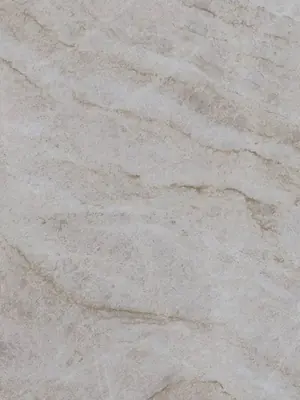 Taj Mahal
 White Macaubas
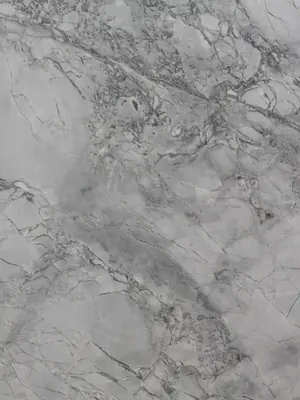 Super White
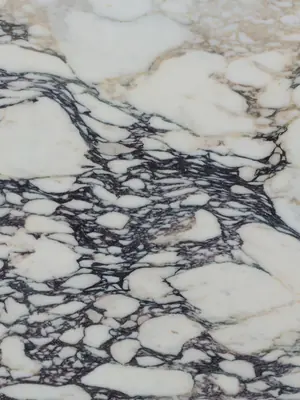 Calacatta Viola