
Who installs your marble? The question worth more than the slab
Installation decides whether a stone lasts thirty years or becomes a problem. Outside installers can be very good; the point is a different one: if a slab breaks, someone has to be responsible. Saving on installation usually ends up costing more than the stone.
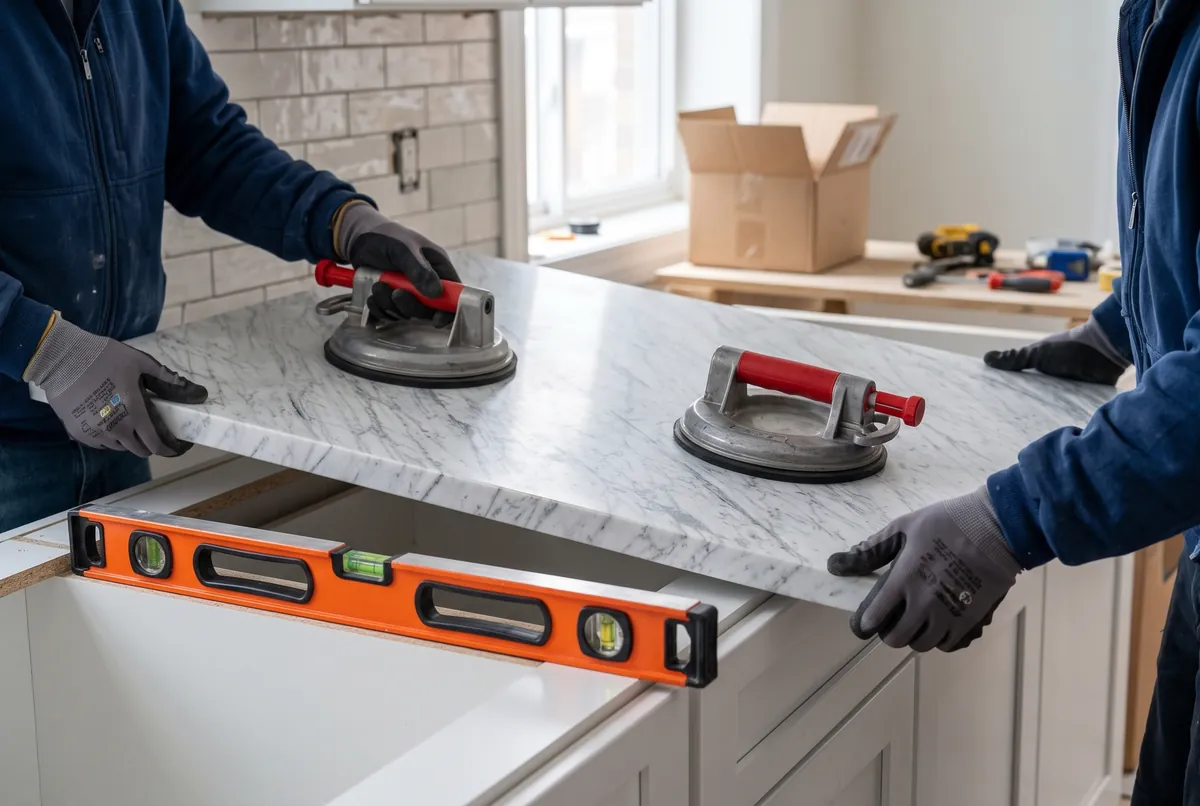
People spend weeks choosing the right material: the veining, the color, the slab that matches the one beside it. Then, when it is time to install it, the choice is often rushed. Yet installation is the part of the project we care about most, because that is where it is decided whether the material lasts thirty years or turns into a problem.
That is why, in Panama, our own team does the installation; in other countries we coordinate trusted installers or send Italian installers, depending on the project. It does not always go that way. Often the client, the architect or the engineer prefers to hand the job to an installer they trust, outside the supplier. And that is where the real problem starts.
The problem is not whether they are good
Let us be clear from the start: we are not saying outside installers do not know their job. They can be very experienced, polite, certified, with a thousand projects behind them. The problem is a different one, and it does not depend on how good they are.
Accidents happen, with marble as in life. A slab can break while unloading, while cutting or while setting. It can happen to anyone. So the right question is not "who is better?" but "if something happens, who is responsible?"
When the material comes off the truck
As a rule, the supplier is responsible for the material while the work stays in its hands: it sells it, cuts it, transports it and installs it. If someone else steps in at any point, the responsibility passes to them. From the moment the material is handed to an outside installer, as slabs or already cut, it is in their hands.
An example we saw up close: an installer breaks a quartz slab. It has to be bought again. Who pays? In theory, the installer. In practice, there are often verbal agreements, papers that limit liability and promises like "don't worry, there won't be any problems." Until the problem arrives.
The doctor comparison
If you have an accident, you go to the hospital. You do not go to your cousin who studied nursing, however good he is.
You go somewhere that protects you, because if something goes wrong someone is responsible. Installing natural stone is the same. A higher price is not just the cost of labor: it is the cost of someone taking responsibility for building the home a person will live in for ten, twenty or thirty years. That is no small thing.
To architects: the client calls you
This is mainly for architects and designers who look after their own clients.
When your project goes to an outside installer and something happens that should not have, the client does not call the installer: they call you. You lose trust, time and often money too. We have seen professionals pay out of their own pocket to close the matter while the installer walked away.
We have come close to that risk ourselves more than once. That is why we talk about it.
The real cost of saving
An outside installer can save you some money, little compared with the value of the stone. That is fine. But if something goes wrong, the bill can triple:
- buying the slab again, if it still exists;
- redoing the cut;
- shipping everything again;
- waiting again, with no idea for how long;
- and hoping it goes right this time.
And there is a point many people miss. High-quality materials are often not unlimited. If you bought eight or nine slabs from the same lot, with veins running from one to the next, and one breaks, you will not find that slab again. The bookmatch, the continuous veining, the effect you chose: all lost to save on installation.
It is like buying a lottery ticket. It might go well, but you have no certainty.
The adhesive matters as much as the slab
There is also a more technical side. Whoever charges less sometimes saves on setting materials.
- Adhesive color. White marble, like Carrara, takes a white adhesive. A gray one or a dark epoxy can show through over time and stain the stone.
- Rigidity. An adhesive that is too rigid does not let the material move: the slab builds up tension and can crack.
It does not happen on day one. A year goes by and all is well; two go by and all is well. After five or ten years the material moves, takes on moisture, and you have to redo the job, with construction inside your home while you live in it.
As suppliers, we use setting materials chosen after years of installations and problems already solved. That is part of the price too.
What has come to us
Clients have come to us with broken materials after installations done by others:
- a travertine bathroom with a wall that came down;
- a beige marble piece of furniture split in two;
- a shop of about 650 sq ft (60 m²) with its 24 × 48 in tiles cracked.
And they were not the only ones. In every case the cause was the same: saving in the wrong place. It makes no sense to choose a Portoro and give it to whoever charges the least to install it. The difference shows more in the installation than in the material.
Who pays in the end
We will say it again: we have nothing against outside installers. We are telling you what experience has taught us. They often charge less because their liability is limited, and sometimes because they use setting materials that are wrong for that stone.
And when something goes wrong, the one who really pays is not the architect, the engineer or the installer. It is the homeowner. The risk is not always worth it.
Frequently asked questions
What adhesive should be used for white marble?
A white adhesive made for natural stone. A gray one or a dark epoxy can show through over the years and stain the slab.
Who pays if the installer breaks a slab?
Whoever has the material in their hands when it breaks. If someone other than the supplier installs it, the responsibility passes to that person, and it is worth putting in writing before work starts.
Why does marble stain or crack years after installation?
Almost always because of the setting materials: a colored adhesive that shows through, or one so rigid that the stone cannot move. With moisture and movement, the slab stains or cracks.
What is the best adhesive for marble?
There is no single one: it depends on the stone, its color and where it goes. White marble slabs indoors take a white adhesive made for natural stone; repairs or bonding marble to marble take an epoxy matched to the stone's color. Your installer should tell you which one they use and why.
Can marble be installed with silicone?
Not to set slabs: regular silicone lacks the strength and stability a stone needs. It is only for sealing joints, and it must be neutral-cure and rated for natural stone, because acid-cure silicones stain marble.
About to install natural stone?
Tell us which stone it is and where it goes. We will tell you which adhesive it needs and how to organize the installation so someone is responsible from start to finish.
The stones in this guide
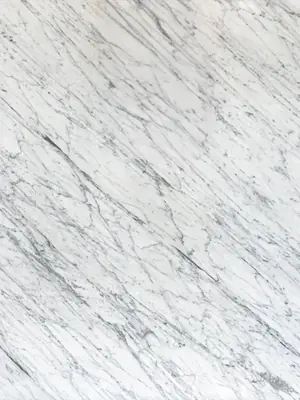 Carrara
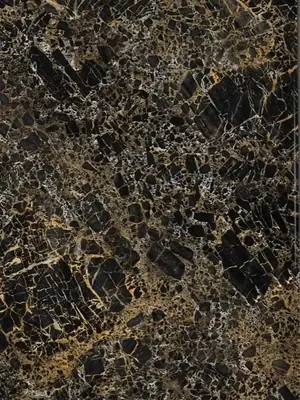 Portoro
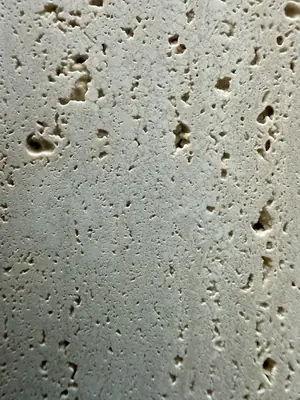 Roman travertine
Keep reading
- Quartzite or quartz?Heat, sun and stains: which one suits your kitchen.See more
- Marble or granite?Differences in look, toughness and care, room by room.See more
- Quote checkSend us the quote you got and we will tell you if the price is fair where you are. If it is not, we find you a better option.See more