
Tahiti quartzite
Quartzite · Brazil
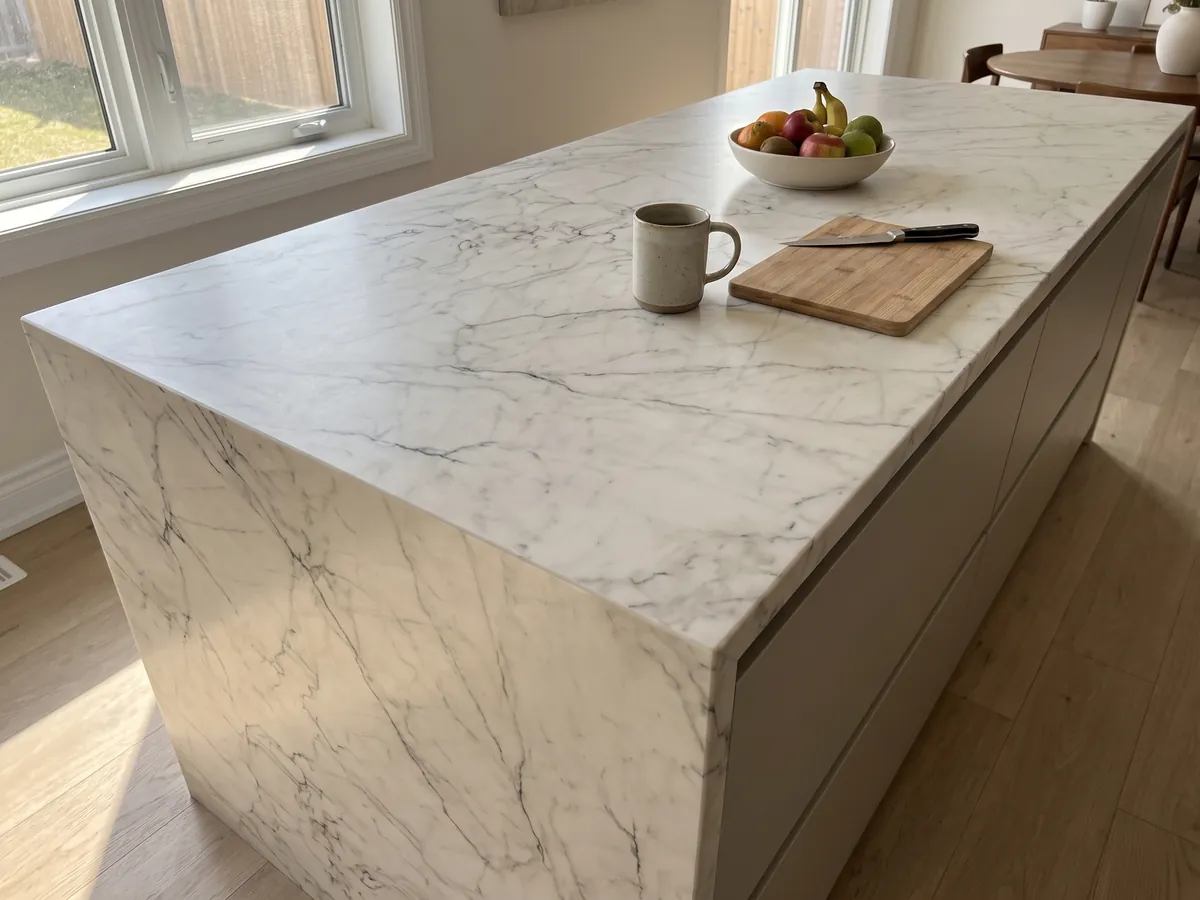
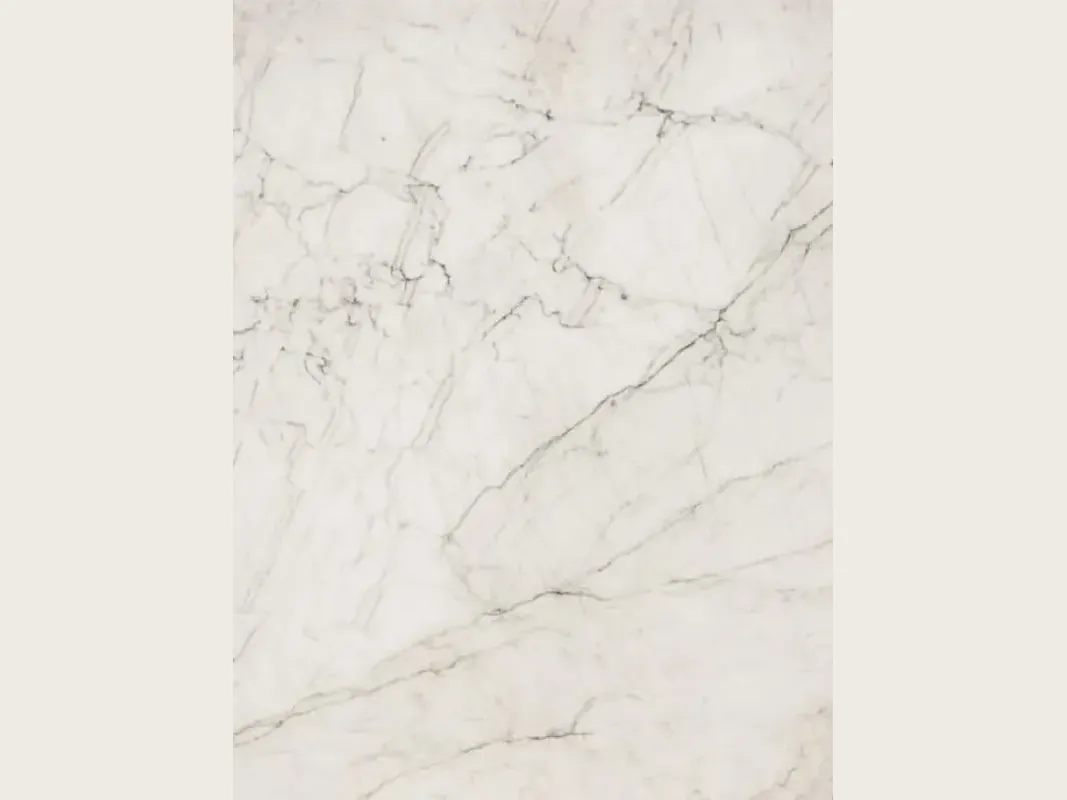
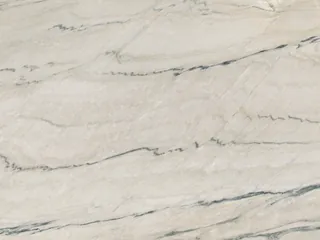
Very fine gray and black veins form a loose network over the warm white in the photo. Tahiti quartzite comes from Brazil and looks like marble; in use it is not: it scratches glass and resists heat and acids far better.
- TypeQuartzite
- ColorWhite quartzite with grey
- OriginBrazil
- ShippingOn request, to any country · how it reaches yours
What Tahiti Quartzite Looks Like
The pattern on this slab is a network of very fine gray and black veins, loose over the warm white background. The veins cross, so the pattern does not run in one direction. The contrast sits at a midpoint: the network shows without covering the background. Within the slab, the network spreads evenly across the whole surface. In the photo it is in a glossy polished finish, with the veins clearly defined.
- BackgroundWarm white
- PatternVeined
- ContrastMedium
- Variation within the slabUniform
Where to Use Tahiti Quartzite
- KitchenCountertops that take daily use
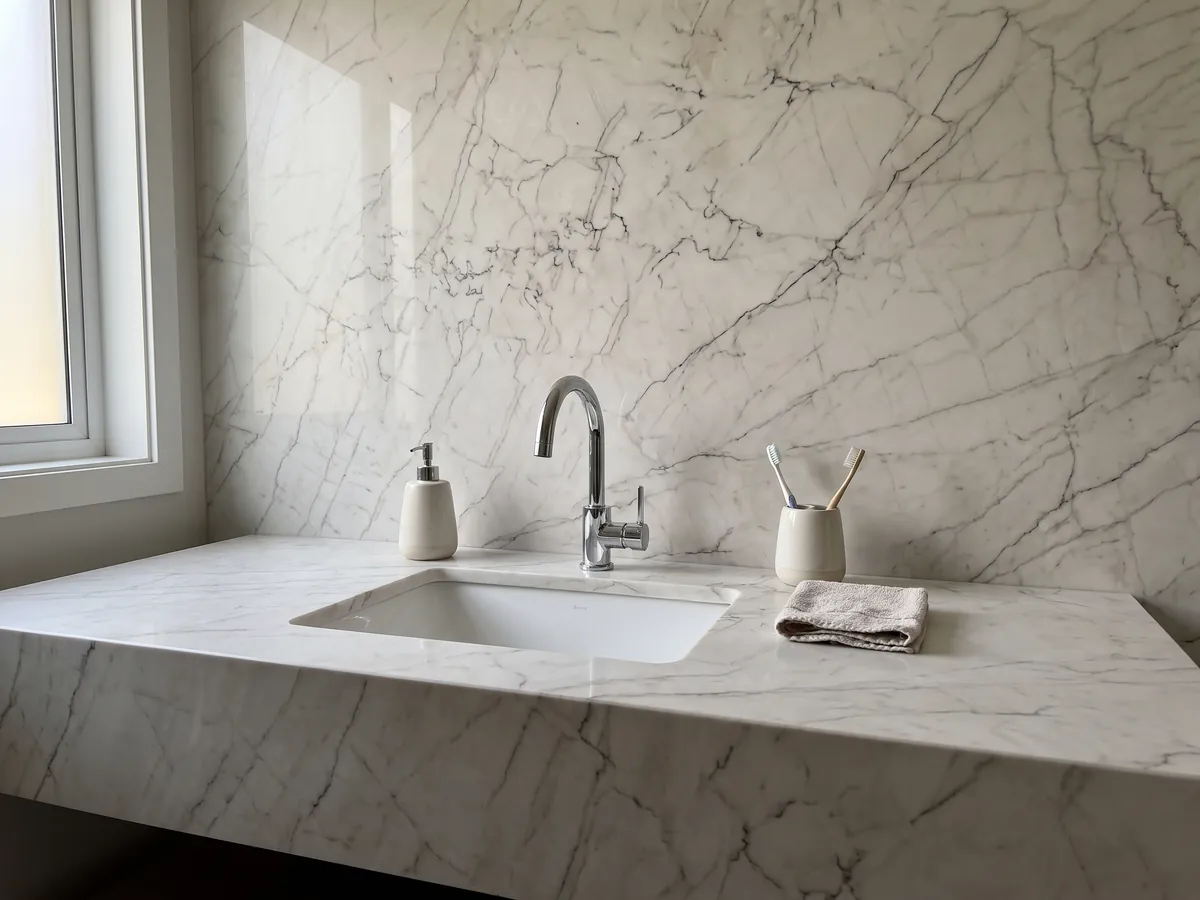
- BathroomsVanities, showers and damp walls
- WallsWall cladding where the fine network shows in full
- TablesDining tables that take daily use
- Interior floorsInterior floors; where there is water, better without gloss
- OutdoorsFaçades and terraces; when wet, no glossy polish
- ScratchesHigh
- StainsMedium, with sealer
- AcidsHigh
A drop of lemon on an offcut shows whether the stone reacts: if it does, it contains some calcite or dolomite.
Tahiti Quartzite Finishes
The photo shows the polished finish; honed and leathered change the reflection and the feel, not the pattern.
-
Polished
It is the finish in the photo: it reflects light and leaves the vein network in full view.
-
Honed
It removes the gloss of the polish and leaves a silky, matte feel.
-
Leathered
It gives a relief you notice as you run your hand over it; the gloss drops and a matte, textured surface remains.
Technical specifications
| Type | Quartzite |
|---|---|
| Color | White |
| Origin | Brazil |
| Hardness | 7 on the Mohs scale |
| Pattern | Veined |
| Common finishes | Polished, honed, leathered |
| Works best in | Kitchen, bathrooms, walls |
| Thickness and format | Depending on the slabs available; we confirm it in the quote |
How Much Does Tahiti Quartzite Cost?
There is no single price per m². These factors move it, and the quote already includes shipping to your country.
- Variety
- Thickness
- Finish
- Square meters and cuts
- Shipping
For a quote, send us
- The measurements or a photo of the plans
- The thickness, if you have already decided on it
- The finish you like
- The city where you receive it
Tahiti Quartzite at Home
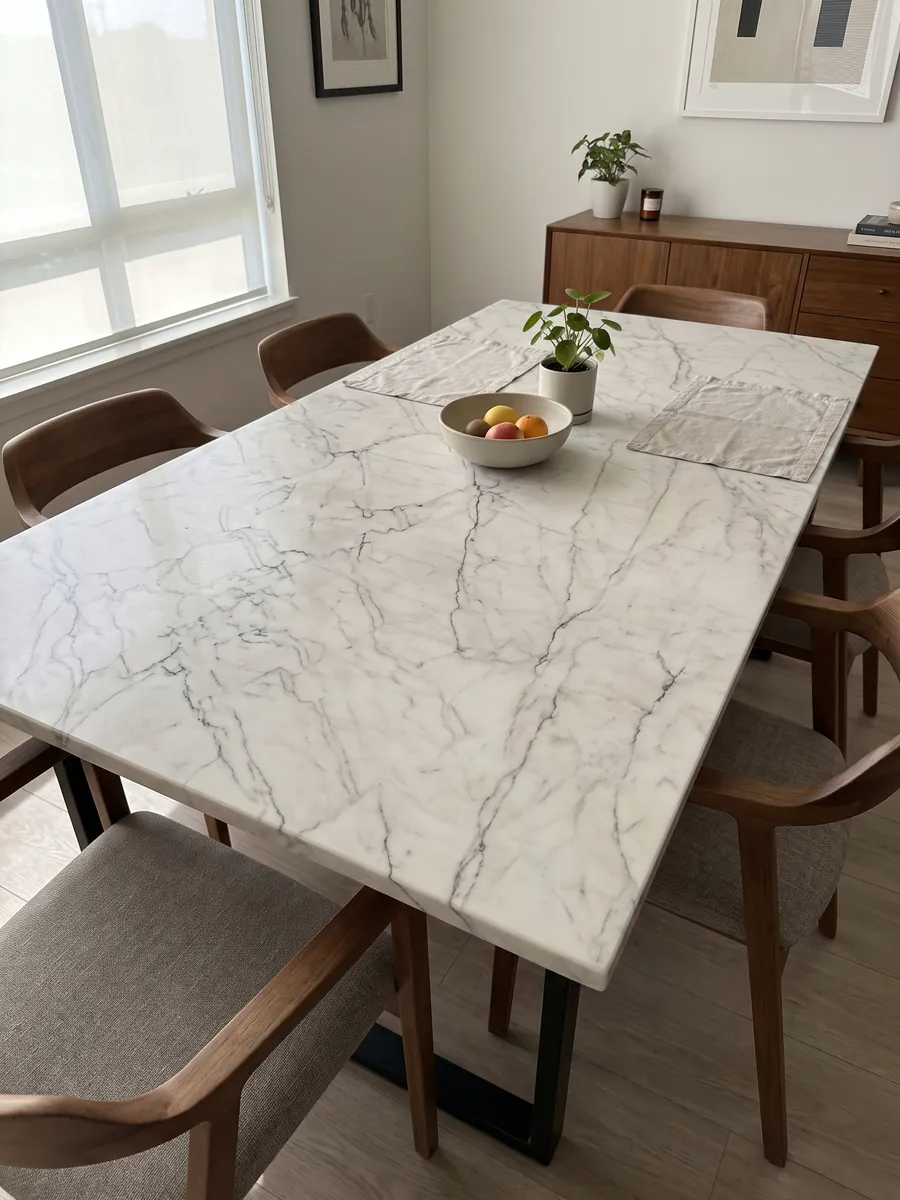
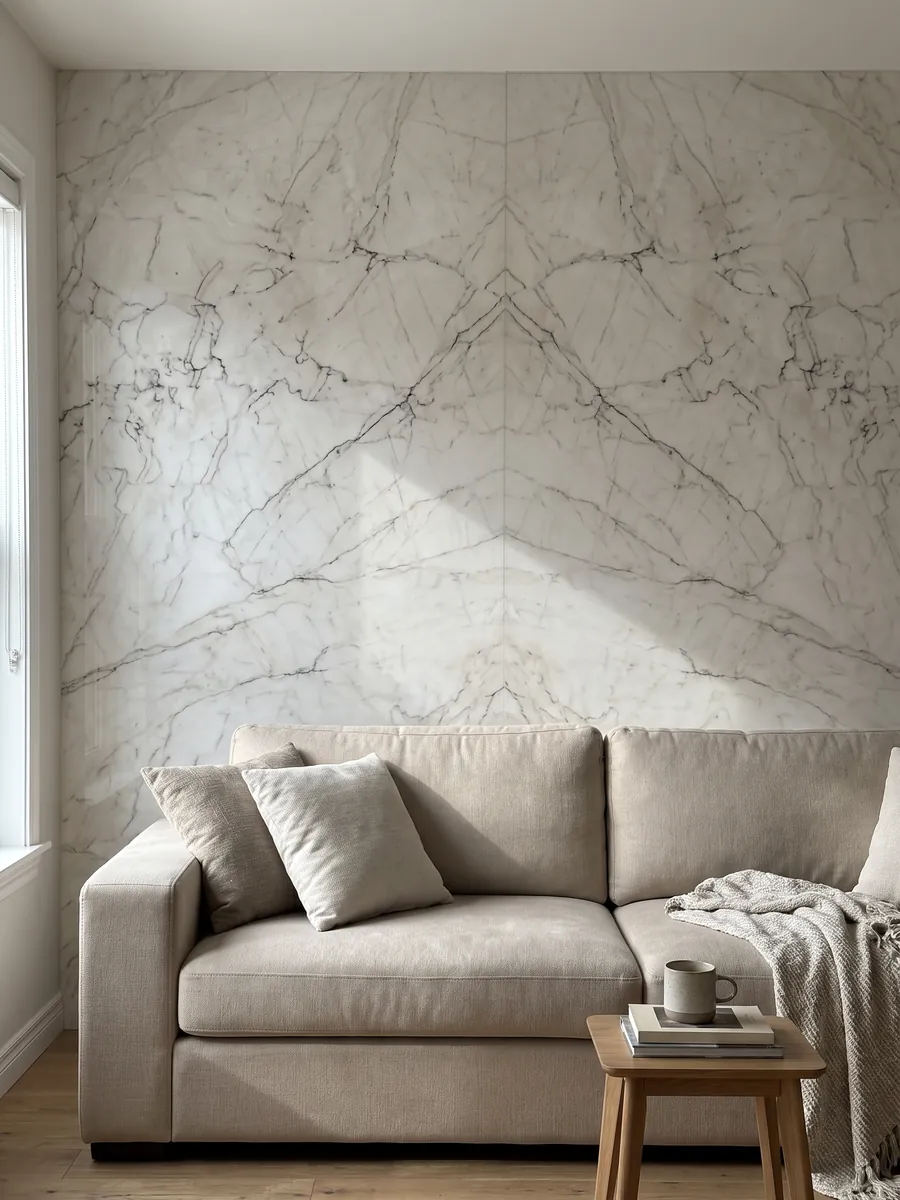
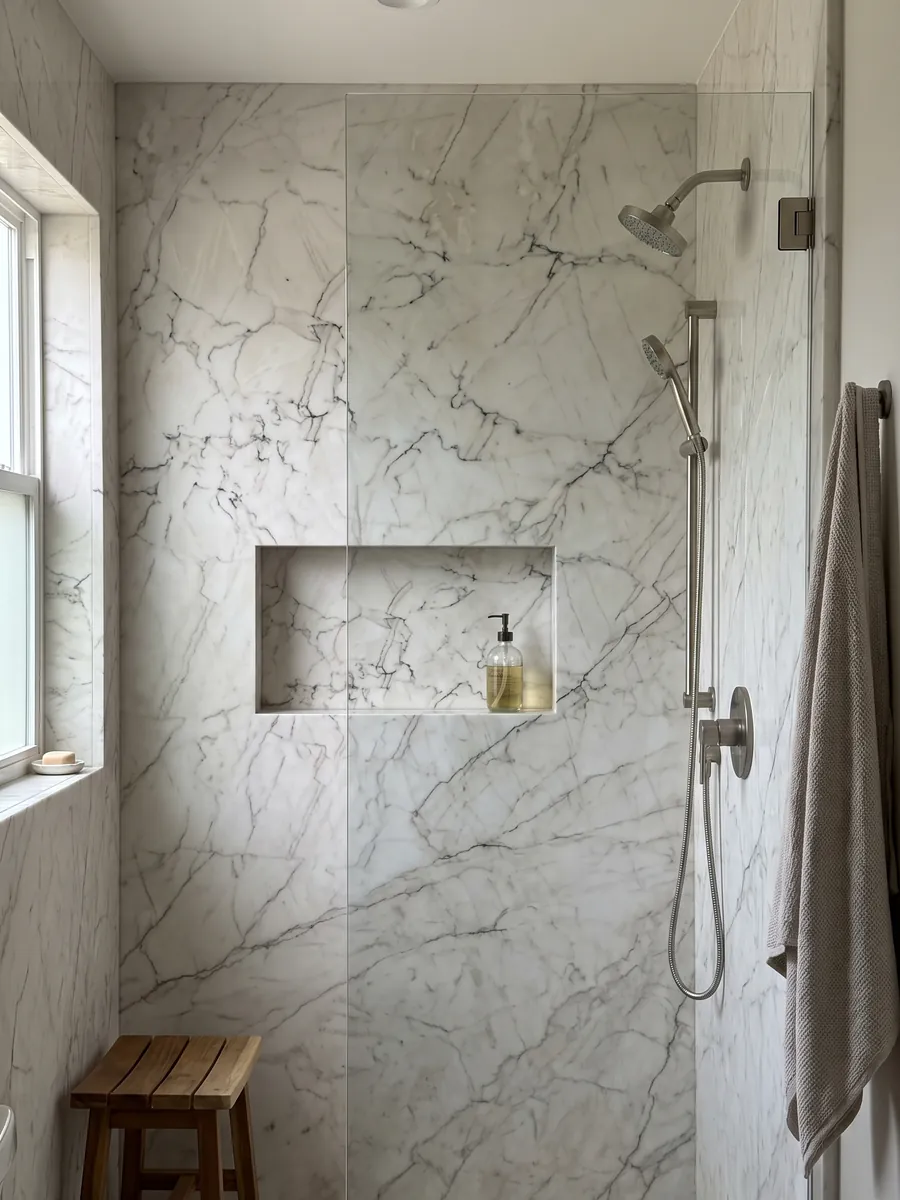
How it looks in different spaces. Visualizations created from the real slab.


Questions about Tahiti quartzite
How does it differ from White Macaubas quartzite?
In the pattern. Both are white quartzites with fine lines. In its photo, White Macaubas quartzite has a bluish white background with fine, parallel dark lines. In yours, Tahiti quartzite spreads a network of crossing veins over a warmer white. Looking at the two photos, one reads as stripes and the other as a net.
Does Tahiti quartzite hold up to kitchen use?
Yes. It scratches glass, and a knife passes without leaving a mark. Even so, a cutting board is a good idea; not for the stone, but for the knife's edge. Compared with marble it tolerates everyday heat and acids far better, something you notice on a working countertop.
Does Tahiti quartzite need sealer?
It depends on the stone. Each quartzite has its own porosity: some absorb little water and others call for sealer. Drop a bit of water on an offcut: if the stone under the drop darkens, it is time to seal. To clean it, water and a cloth with neutral soap.
Is the slab in the photo real?
Real: what you see in the photo is Tahiti quartzite, in its polished finish. Every slab is different, so the one that goes to your home is chosen from its own photo. Before you buy we send you photos of the slabs available for your order.
How does Tahiti quartzite reach my country?
We ship to any country, with the stone's documents of origin and its CE certification. On the shipping page we explain how it reaches each region.